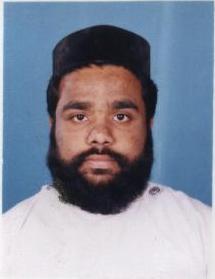
Reflection for Today
by
Rev. Fr. Jobby Peter
BIBLE TEXT : 1 PETER 3:8-12 (READ)
“For the eyes of the Lord are on the righteous” Vs.12
Righteousness is an attribute of God and the same is expected of all the
Christians. St. Peter makes it clear that God is pleased only with a righteous
person. This section of the Epistle remind Christians of their prime duty: Bless
others. We are often tempted to bless those who bless us whereas St. Peter
suggests that a Christian ought to bless every fellow Christians and those who
persecute you. How can a Christian bless a fellow Christian?
“All of you be of one mind, having compassion for
one another; love as brothers, be tenderhearted, be courteous” (vs.8). Psalmist
says, “Behold, how good and pleasant it is for brethren to dwell together in
unity!” (Ps 133:1). Secondly, St. Peter
desired that believers give an honest blessing, not one muttered through
clenched teeth, to those who persecute them. The Church as a corporate
priesthood is to express God’s graciousness to the entire world. There is a
close relationship between giving blessings and inheriting blessings. Blessing
others in turn will bring blessings to us. Christians are not to
“return evil for evil or reviling for reviling, but
on the contrary blessing, knowing that you were called to this, that you may
inherit a blessing” (vs.9). Our behavior
today has consequence in the future. Righteousness is not just confined in
blessing others, but it is much more than this. The phrase
“He who would love life and see good days” (vs.10)
suggests happy living even in midst of persecution and troubles. St. Peter
exhorts righteous living among the Christians to have a happy life and to enjoy
good days. He describes righteous living as 1) Refrain tongue from evil – the
main obstacle in righteous living and in turn receiving God’s blessing is the
sin committed by tongue. One should be extra cautious about the manner, style,
and words of the speech. 2) Refrain his lips from speaking deceit – lips should
be guarded from speaking all sorts of lies immaterial of whether profitable or
unprofitable. Lips should not bring forth deceit. 3) Turn away from evil and do
good – along with tongue, one should have control over the actions. A Christian
is not supposed to fall in his actions. He should live uprightly. 4) Seek peace
and pursue it – to seek peace is more than absence of conflicts. Christians
should be effective peacemakers and must work hard at peace. Effective
peacemakers build good relationships understanding that peace is a by-product of
commitment. They anticipate problems and deal with them before it occurs. And
God’s eyes are upon such people and His ears are open to the prayers of such
ones.
BLESS OTHERS SO TO BE BLESSED BY GOD.
Prayer: - Lord, help me to dwell with my brethren in calm and peace. Help me to bless even those who trouble me. You are pleased with righteous people and so help me to live righteously guarding my tongue and actions. Hear my prayers and answer me. Amen.
BIBLE TEXT: HEBREWS 4:6-9 (READ)
“Today, if you will hear His voice, do not harden your heart” Vs.7
St. Paul is speaking of the “rest” that is assured by Jesus Christ. This rest in Jesus and by Jesus should be the aim of every Christian. St. Paul is drawing a contrast between the rest that is assured by Jesus Christ and the rest as understood by Jews through Old Testament. There are three types of God’s rest known to the Jews: (1) the Sabbath rest, the day on which God rested from His works (Gen 2:2,3); (2) the rest from the Egyptian bondage, which the Israelites coming out of Egypt experienced in Canaan; (3) the rest in the kingdom, the ultimate Sabbath rest found in heaven established by Messiah. The rest mentioned by St. Paul is a reference to the third type of rest, the perfect, final rest of the Kingdom of Heaven. Faith and obedience are inseparable. Lack of one is lack of the other. Lack of either bars entrance into rest. Israelites could not enter the Promised Land because of their faithlessness and disobedience. “….and those to whom it was first preached did not enter because of disobedience” (vs.6). St. Paul highlights the temporal nature of the rest that is of the world. Jews failed to understand the true nature of rest i.e. the third type of rest and were contended by the rest of this world. Joshua and Caleb were the only two men who left Egypt and entered into Canaan. They had not participated in the disobedience of Israel. The possession of Canaan under Joshua was not the original rest, otherwise David would not have spoken centuries later of a rest still remaining for us. As pilgrims in this world, one should not be deceived in the rest offered by this world. The world and its nature are temporal and therefore we should long for the things that are eternal in nature. God worked for six days and the seventh day he rested. Therefore, rest is a promise for those who work for it. St. Paul reminds that Holy Spirit plays a vital role in letting us know the path one has to walk so as to enter the perfect rest. Our ears should always be ready to listen to the words of the Holy Spirit. One should not harden the heart as the Israelites did while in their journey to Canaan. If entrance to Canaan is this difficult, how much will it be to enter the final rest, The Kingdom of God.
WILL YOU BE THERE?
Prayer: - Lord, be with me as a traveler and do guide me the path I should walk so as to reach the final rest. Let me hold fast faith and obedience. As Joshua and Caleb made it to the Promised Land help me also to make it through perseverance and self-control. Amen.
BIBLE TEXT: GENESIS 19 (READ)
“Where are the men who came to you tonight?” Bring them out to us that we may know them carnally” Vs. 5
The sin that became the last straw in the destruction of the city of Sodom and Gomorrah. The sexual sin. A sin in varied forms being catered in today’s society. Sex is a gift of God to human beings. Unlike animals that are directed by instincts, God gave human the power of reasoning and discretion. The sole aim of sexuality is not just seeking pleasure and that is why is recommended only in the bond of Holy Matrimony. Homosexuality and Lesbianism is the perverted form of sex (the sin that led to the downfall of a city). These are against the plan of God as they do not fulfill the ‘purpose of sex’ but only satisfy bodily lust. “For this reason god gave them up to vile passions for even their women exchanged the natural use for what is against nature. Likewise also the men, leaving the natural use of the women, burned in their lust for one another, men with men committing what is shameful, and receiving in themselves the penalty of their error which was due.”(Rom 1:26-27). Today many western churches even are permitting such gay and lesbian marriages and society recognizes them as forward churches. Human right organizations consider that it is individuals right to have any sort of life (sex). Media is encouraging such acts giving the lame excuse of “Public demand”. Cinemas promote it as an alternate life-style. If one cannot talk of sex (perverted), he is the “ODD ONE OUT” from the group. Christians are to refrain from such acts.
USE YOUR DISCRETION ON AS WHAT TO SEE, LISTEN, and THINK.
For the days are coming when you say, “I have no pleasure in them” (Ecc12: 1).
Prayer: Lord, help me to keep myself away from all sorts of sexual sin. Let me be pure in my thought, action, and speech. Help me look up to you; listen to you and to meditate on your statutes. Amen.
BIBLE TEXT:ST. LUKE 24:13-35 (READ)
“Abide with us, for it is toward evening, and the day is far spent” Vs.29
Today is the Third Sunday after the new Sunday. This is a delightful account of a resurrection appearance of Christ to two perplexed disciples: 1) Cleopas (vs.18), whom tradition identifies as the brother of Joseph, Mary’s husband, and thus Jesus’ uncle; and 2) the unnamed follower who, according to tradition, is the evangelist Luke himself. These disciples were shattered in their hopes of all that has happened in Jerusalem. They had the traditional view of Messiah, who will destroy the enemies of Israel and establish the kingdom of Israel. They expected Jesus to be the same but he was crucified and all their hopes were shattered. They were on their way back to their village discussing of the things happened in Jerusalem. As usual, Jesus joined them in their journey to strengthen their faith. Here God prevented these men from seeing Jesus until Jesus himself was ready to reveal himself to them. God wanted that they should have a clear understanding of resurrection before they recognize Jesus. Jesus enquires from them what all they knew about the Messiah and about their understanding of Jesus as Messiah (vss. 19-24). After a clear picture of their mind set Jesus now starts to reveal himself slowly to them. His approach was two fold. Firstly, He started speaking to them through the scriptures. The risen Lord censures them for their weak faith, explaining the prophecies of the Old Testament which were fulfilled through His Passion and Resurrection. “And beginning at Moses and all the Prophets, He expounded them in all the scriptures the things concerning Himself” (vs.27). The interpretation and explanation of the Scripture was not enough for their eyes to be opened and to recognize Jesus. Therefore, now Jesus moves on to next step. It was evening as they reached their village and they invited the stranger (Jesus) to spend night with them. It was suppertime and they all sat at the table. “He took bread, blessed and broke it, and gave it to them” (vs.30). The Lord broke bread with them in the same manner as during the Last Supper. Christ’s action’s and the experience of the meal by the two men image the Eucharist. As He broke the bread and gave it to them, “Then their eyes were opened and they knew Him” (vs.31). These two are the basics of Christian spirituality: breaking of the Word and breaking of the Bread. Both are complementary to each other. The apostolic churches in their liturgy have included both these aspects. Protestants rejects breaking of the bread considering breaking of the word as the sole criteria of spirituality. When their eyes were opened they could recognize Jesus and their shattered hopes were turned to joy, their hopelessness was turned into great hope. They returned and shared their joy and experience of the table, “And they told about the things that had happened on the road, and how He was known to them in the breaking of the bread” (vs.35).
EUCHARIST IS THE “CHRISTIC” PRESENCE.
Prayer: - Lord, thank you for revealing yourself to me. Be with me when my faith shatters and strengthen me to believe in you always. Let me experience your presence in the Eucharist and let my eyes be opened to see your marvelous glory. Amen.
BIBLE TEXT: 1 PETER 4:7-11 (READ)
“But the end of all things is at hand” Vs. 7
The conclusion calls for a total focus of life on glorifying God. St. Peter set forth the proper conduct of those experiencing suffering. In midst of all sufferings believers should meet the standards of Christian discipleship. St. Peter repeatedly reminded the community of the imminent return of the Lord and that the community should live expectantly of this very fact. Believers must perfect themselves in two aspects: the vertical component i.e. relation with God and horizontal component i.e. relation with humans. Since the Second coming of the Lord is soon one should “therefore be serious and watchful in your prayers” (vs.7) and “have fervent love for one another” (vs.8). One’s possessions, status, and power will mean nothing in God’s Kingdom. The shortness of time remaining should motivate believers to be earnest and disciplined in their prayers. Mutual love, support, and encouragement would also be a great defense. No Christian is an island; no one is alone. The fellowship of the believers helps a Christian to stand up any crisis. Loving others is also a self-defense as it covers multitude of sins. “Hatred stirs up quarrels, but love covers all offenses” (Prov 10:12). This does not mean that love ignores, overlooks, or tries to hide sin rather it means that believers ought to live according to God’s will. St. Peter encourages believers to be hospitable (vs.9). It is not just important to be hospitable but hospitality without grumbling. Hospitality is a strong expression of love. Christian should be ready to share with others whatever is available without grumbling. As a preparation for His second coming, a believer should think how to use the talents or abilities for the glorification of God? St. Peter says, “As each one has received a gift, minister it to one another, as good stewards of the manifold grace of God” (vs.10). God has blessed everyone with spiritual gifts. Spiritual gifts are bestowed on us to serve and love one another. Our gifts are not for self-projection or self-glorification but are to be used wisely as per God’s will. Believers should humbly use the talents for the glorification of God and for the benefit of fellow beings. God has called us to be stewards of the talents and not as the owners as ownership is of God.
PREPARE FOR THE KINGDOM BY SERVING.
Praying: - Lord, help to prepare myself for the kingdom by serving you and fellow beings. Thanks for the gifts that you have blessed me with. Give me the strength to use it humbly for the benefit of others. Amen.
BIBLE TEXT: St. MARK 11:12-21 (READ)
This incidence is recorded by two of the evangelists, St. Mathew 21:18-22 and St. Mark 11:12-21. In this passage, two unusual incidents are related: the cursing of the fig tree and the clearing of the Temple. Both should be read together to get the correct meaning of the incidence. The cursing of the fig tree was an acted-out parable related to the clearing of the Temple. This next morning was Monday. They spent the nights in Bethany and went into Jerusalem during the day. Bethany was about two miles outside of Jerusalem. It was along the way that Jesus felt hungry. Fig trees were a popular source of inexpensive food in Israel. In March, the fig trees had small edible buds; in April comes the large green leaves. Then in May, the buds would fall off, replaced by the normal crop of figs. This incident occurred in April, and the green leaves should have indicated the presence of edible buds which Jesus expected to find on the tree. However, this tree, though full of leaves, had no buds. The tree looked promising but offered no fruit. The cursing and withering of the fig tree is a prophetic act, signifying the judgment of Israel. In scripture fig tree is often a symbol of Israel (Hos 9:10). It was not the season of figs means that this fig tree had sprouted an early full foliage, indicating a first crop, but without bearing any fruit. Jesus did not curse the tree because he was angry at not getting food but he wanted the disciples to learn that Israel had been rejected. They didn’t know that Jesus was on his way to cleanse the Temple of the people who were desecrating it. The Temple was supposed to be a place of worship, but true worship had disappeared. By cursing the fig tree, Jesus was showing his anger at religion without substance. Jesus’ harsh words to the fig tree could be applied to the nation of Israel and its beautiful Temple. Fruitful in appearance only, Israel was spiritually barren. This parable of judgment on spiritually dead Israel revealed a severe punishment. The early church later applied this parable to the destruction of Jerusalem in A.D. 70. Jesus knew that it was not the season of figs but he cursed so that disciples may understand what God expects from them who were going to be the pillars of the church. Church is to be led according to God’s will and that it is should be fruit bearing. The fig tree will be an indelible image in their minds. Both the evangelists club this incidence also with faith and prayer. Christians are expected to be fruit bearing. Outward appearance and superficial spirituality can fool human but not God.
WHAT SORT OF TREE ARE YOU: BARREN OR
FRUITFUL?
Prayer: - Lord, let me not be like this fig tree that was promising from outside but was fruitless. I am sorry if ever I had been a hypocrite in my spiritual life. Help me to worship you as you desire. Clean me as you cleansed the temple. Amen.
BIBLE TEXT :St. JAMES 4:13-17(READ)
“All such boasting is evil” Vs.16
This section of the Epistle is addressed to the elite business class people but is also true every one of us. These verses reveal the opposite of a humble and teachable Spirit under God. Often we forget to involve God in our planning. St. James is not Condemning intelligent planning but rebuking presumptuous planning that disregards God. When making plans, the Christian should acknowledge his dependence upon God and submission to his will. St. James is emphasizing the very fact that we should always involve God in every aspect of life i.e. from planning to implementation. “Today or tomorrow we will go to such and such a city, spend a year there, buy and sell, and make a profit” (vs.13). To say such a statement is a sign of pride and arrogance because one cannot predict what next moment is for us. These people were planning as if their future was guaranteed. St. James is not suggesting that one should not make plans because of the possible disaster, but that to seek God’s will and involve God in it. Because the future is uncertain, it is even more important that we completely depend on God. St. Paul before leaving Ephesus says, “I must by all means keep this coming feast in Jerusalem; but I will return again to you, God willing” (Acts 4:21). He again says, “But I will come to you shortly, if the Lord wills” (1Cor 4:19). The faithful Muslim brethren always add “Insha Allah” to their conversation giving the message that God is involved in every aspects of their life. St. Luke narrates a parable where Jesus is condemning a rich man who planned a lot about his future. His idea of future was very worldly as there was no place for God but he forgot the very fact that his life is temporal and is in the hands of God. Jesus says to him, “Fool, this night your soul will be required of you; then whose will those things be which you have provided?” (Luke 12:16-21). Our lives are like the morning fog that covers the countryside in the morning and then is burned away by the sun. We should not be deceived into thinking we have plenty of time left to live for Christ. Today is the day to live for God. Believers cannot live independently of God. We must make sure those plans include the clause, if the Lord wants us to. Our plans should be evaluated by God’s standards and goals, and they should be prayed over with time spent listening for God’s advice.
INVOLVE JESUS IN YOUR PLANNING: HE WILL NOT DISAPPOINT YOU.
Prayer: - Lord, let me not boast of anything except the cross. I involve you in every aspect of my life. As I plan my future, I seek your will in all my planning. Let everything in my life be as per Christian standards. Amen.
BIBLE TEXT---- GENESIS 21 (READ)
“Then she (Hagar) departed and wandered in the wilderness of Beersheba.” Vs.14
Wilderness has a great relevance in spiritual life. The “wilderness experience” is one that every Christian ought to experience in life. The dictionary meaning of the term “wilderness” is ‘ desert’, ‘ Non cultivated land’. In general a place uninhabited, vague and confused. The wilderness is a real life experience especially when in sorrow, desperation and despised. Everyone passes through this wilderness at so many point of time. Even though we dislike the wilderness but it is here where one experiences God. Wilderness experience is a challenge in Christian life and a real test of ones faith and belief. Hagar experienced the presence of god twice in the wilderness. She cried out in her wilderness experience and God was at help for her. It was the wilderness experience (wandering long 40 years) that prepared and strengthened the Israelites in the ways of god. There was the real test for them and the Bible is witness of so many who could not make it through. Wilderness (they murmured against Moses and God when thirsty, hungry and invasions) proved how little faith they had in the one who called them out of the bondage from Egypt. Only handful could make it to Canaan. God used the wilderness to train David so as to make him king of Israel. It was in the wilderness that Elijah experienced God’s providence when fed by raven. It was in the wilderness that Satan led Jesus after his fasting to test him. It was in the wilderness that Jesus multiplied few bread and fish into thousands. Early church fathers went into wilderness and sought God. Wilderness is a place: -
a) No people to help
b) No idea of direction
c) No means for daily bread
d) Confused and helpless
WHEN NOTHING REMAINS GOD IS THE ONLY REFUGE.
Don’t be afraid of wilderness in your life. It will lead you to God and teach you to depend on God for everything.
Prayer:- Lord, help me to understand the very purpose of my life. Give me the strength to overcome all wilderness experience in my life. Help me to seek you as Hagar did and be at my help as you were for her. Forgive me if I ever boasted on my achievements rather help me to accept all is from you and may I be humble in your presence. Amen.
BIBLE TEXT: 1 JOHN 4:20-21 (READ)
“That he who love God must love his brother also” Vs.21
One of the major themes of St. John’s theology is the concept of ‘love’ that is spread through out in his Gospel as well as in Epistles. He can even be addressed as an ‘Apostle of Love’. He has emphasized the close relationship of faith, love, obedience, and life- the all-inclusive term for salvation. John again was probably quoting the spiritual elitists who boasted often of their relationship with God. This boast, I love God, can be tested by the persons love for the community of God. In Christian terms, to love God necessarily means to love others. If a person hates other Christian, then the love of the person to God is questionable. Such was the case with Diotrephes, who refused to have fellowship with John and his co-workers (3 Jn 1:9, 10). In fact, John says that such a person is a liar. “If someone says, I love God and hates his brother, he is a liar” (vs.20). Everyone believes love is important, but love is usually understood only as a feeling. In reality, love is a choice and an action. Love is not something that has to be kept at the level of feelings rather should be seen in action. St. Paul describes the true nature of love that is not at the level of feeling but at the level of action. “Love suffers long and is kind; love does not envy; love does not parade itself, is not puffed up; does not behave rudely, does not seek its own, is not provoked, thinks no evil; does not rejoice in iniquity, but rejoices in the truth; bear all things, believes all things, hopes all things, endures all things” (1 Cor 13:4-7). God is the source of our love. He loved us enough to sacrifice his Son for us. Jesus is our example of what it means to love; everything he did in life and death was supremely loving. To love someone means to be like Jesus to that person- to be selfless and to give sacrificially. Loving this way ignores all the enticements that normally compels us to be nice people to be personally benefited by it. The Holy Spirit gives us the power to love; he dwells in our heart to make us more and more Christ like. God’s love always involves a choice and an action, and our love should be like this. John clarifies that it is rather impossible to love God without loving fellow beings. If we don’t love people we can see, how can we love God, whom we have not seen? Human beings are the visible representatives of God in this world who are created in the “image and Likeness” of God. It is very easy to say that one love God when that doesn’t cost anything more than a weekly attendance in the Church. But the real test of a person’s love for God is how that person treats the people who is next to him or her. St. John stresses that this commandment of love is that he has received from Jesus himself. “And this is the commandment we have received from Him: that he who loves God must love his brother also” (vs.21).
EXTEND TO OTHERS WHAT GOD EXTENDED TO YOU:UNCONDITIONAL LOVE.
Prayer: - Lord, you are the source of love. Fill me with your divine love so that I may be able to love others unconditionally. Let my love be expressed in action and help me to extend to others that you have extended to me i.e. unconditional love. Amen.
BIBLE TEXT:St. JOHN 21:15-19 (READ)
“Do you love me more than these?” Vs.15
Jesus continues to appear before his disciples to strengthen their faith in his resurrection. Resurrection is that which Jesus has attained through his death on the cross-defeating sin and death. It is the resurrection that has to be the basis of the church and therefore it was essential that the disciples who were going to be the pillars of the church believe in the resurrection. We can see how Jesus removes the cloud of doubt from his disciples. He cleared the doubt of Thomas and now is here to strengthen Peter. It is worth noting that Jesus addresses him not as Peter but as Simon, his old name. It was Jesus who changed Simon to Cephas or Peter that means “Rock”. “You are Simon, son of Jonah. You shall be called Cephas.” (Jn 1:42). Simon, son of Jonah was the name Jesus had used when he first met this man who would become his disciple (Jn 1:42). But Peter had not yet proven himself to live up to that name-Peter, “the rock”. Jesus’ first question to Peter, “Do you love me more than these?” (vs.14) could be translated in three ways.1). Do you love me more than these men love me? Before the Passion of Christ, Peter had expressed absolute loyalty to Him, even if the others were to be scattered. “Even if all are made to stumble because of you, I will never be made to stumble” (Mat 26: 33). Peter did just the opposite of what he boasted. So, Jesus wanted to assure that whether he really loved him, more than the other disciples did.2). Do you love me more than you love these men?3). Do you love me more than these things? Out of desperation, Peter and disciples had gone back to their old profession of fishing. When Jesus had called them to discipleship, they had left all their social securities and followed him and now it was heart breaking for Jesus to see them back in the former state. Jesus was assuring whether he loved him more than the nets and the boat that once they had left. In this beach scene, Jesus led Peter through an experience that would remove the cloud of his denial. Peter had denied Jesus three times. Three times Jesus asked Peter if he loved him. When peter answered yes, Jesus told him to feed his sheep. It is one thing to say you love Jesus, but the real test is willingness to serve him. Peter had repented, and here Jesus was asking to commit his life. Peter’s life changed when he finally realized who Jesus was. His occupation changed from fisherman to evangelist; his identity changed from impetuous to ‘rock’; and his relationship to Jesus changed- he was forgiven, and he finally understood the significance of Jesus’ words about his death and resurrection.
DO
YOU LOVE JESUS MORE THAN EVERYTHING IN THIS WORLD?
Prayer: - Lord, I love you more than
everything. Come to me personally and strengthen me when my faith diminishes.
Change me from what I am to rock so that I too may stand firm in the faith.
Amen.
BIBLE TEXT: 2 PETER 3:11-14 (READ)
“Be diligent to be found by Him in peace, without spot and blameless” Vs.14
The Second Epistle of St. Peter is a manual of preparation for the second coming of Lord Jesus Christ. The second coming is at hand, and morality is connected to salvation. The early Christians were looking forward for imminent return of Jesus and were preparing themselves. When there is a delay, St. Peter encourages them to be patient. “God is not slack concerning His promise, as some count slackness, but is longsuffering toward us, not willing that any should perish but that all should come to repentance” (3:9). That is why this period is known as Grace period, as God is giving us out of His love a time to comeback to Him. He reminds the temporal nature of the created things by saying, “Since all these things will be dissolved” (vs.11). Asaph in his Psalm says, “Our Lord shall come, and shall not keep silent; A fire shall devour before Him, and it shall be very tempestuous all around Him” (Ps 50:3). The coming destruction of the earth ought to cause Christians to carefully examine their lives so that they are pure and holy. Such lives would be in direct contrast to the unholy living and godlessness found in the world. Such lives, lived through faith in Jesus Christ, will continue after the coming destruction. Therefore, the Christians need not fear that day; they could instead actually look forward to it. It is not a culmination day for those living righteously as it is a promise, “look for new heavens and a new earth in which righteousness dwells” (vs.13). Believers look forward to the end of the earth only because it means the fulfillment of another of God’s promises- ‘his creation of the new heavens and new earth’. God’s purpose for the people is not destruction but re-creation; not annihilation, but renewal. God will purify the heavens and earth with fire; then he will create them anew. All believers can joyously look forward to the restoration of God’s good world. “Because the creation itself also will be delivered from the bondage of corruption into the glorious liberty of the children of God” (Rom 8:21). God’s kingdom will be characterized by peace with God; therefore, believers ought to practice peace with God now, in preparation for living in the Kingdom (vs.14). We should not become lazy and complacent just because Christ has not yet returned. Instead, we should live in eager expectation of his coming. What would you like to be doing when Christ returns? That is how one should be living each day.
BE PURIFIED BY WAITING FOR THE LORD.
Prayer: - Lord, thank you for the glorious promise of the second coming. Help me to wait patiently keeping myself pure and holy for your coming. Let me be also among the saints who will partake in your new creation. Amen.
BIBLE TEXT---- GENESIS 16 (READ)
“Hagar, Sarai’s maid, where have you come from, and where are you going?”Vs.8
A question with no answer. If one asks the same question to oneself, many of us will be without any answer, as we never thought of it. This becomes unanswerable when we deviate from God’s plan. Sarai, Abram and Hagar made their own calculation and worked out without seeking what is the plan of God. All ending in utter desperation. Christian life is a vocation with two option (1) call or (2) selection. Call is what is from God and Selection is what we make. When we abide by the call of God, the question is meaningful and when we abide by our own selection, this becomes unanswerable and meaningless. Jonah had a call of God but he made his own selection and ended up in desperation. The fellow travelers posed the same question and Jonah was answerless because he abided in his own selection. Do we have an answer to this? If not, we are not in line with God’s plan or call. Abram corrected himself and god blessed him. Jonah corrected himself and wonders happened.
Are we ready to correct the mistake?
Prayer: Lord, forgive me for not abiding to your plan and for using my selection. I want my life according to your wish. Reveal your plan for me so that I can abide by it. Give me patience to wait and understand your will. Help me not to
BIBLE TEXT:ST. JAMES 3:13-18 (READ)
“Who is wise and understanding among you?” Vs.13
St. James’ epistle can be taken as manual of practical Christian life. He never negated the role faith in Christian life rather emphasized the practicality of the confessed faith. This question is posed before every Christian to have introspection whether one has the genuine Wisdom that is from God. True wisdom is the practical and successful application of the knowledge. Such wisdom comes from God and it bears good fruits. The truly wise person demonstrates ones understanding of Christ by the way one lives. Do our attitudes and motives match our action? A question that one must always ponder. The guidance given to us in God’s word is that of dependable wisdom. As we seek to do good deeds let pride not overtake us. “Let him show by good conduct that his works are done in the meekness of wisdom” (vs.13). Pride always leads to a false notion of self-projection and self-centeredness. A wise will not only display goodness but also humility. Genuine wisdom does not lead us to bitter envy and self-seeking. Being bitterly jealous is a misguided zeal that leads to contentiousness. If one is self-seeking, one cannot think of anything apart from self. It is our selfishness that leads to jealousy and pride. To be jealous is to reject the abilities and talents that God has bestowed on to other person. The source and standards of such type of wisdom is from the world and not from God. “This wisdom does not descend from above, but is earthly, sensual, demonic” (vs.15). This wisdom does not come from faith- it is worldly and sensual. Sensual (Greek. Psychike) here means unspiritual, not possessing the Spirit of God. All such attitudes are of the devil whose very intention destruction of every sort. It can create situations in home, neighborhood, society and Church that could damage the relationships. Be cautious and watch how often even a single slip of tongue or tone variation disrupts the whole Christian atmosphere. St. Paul addresses such people as “the enemies of the cross of Christ” (Phil 3:18, 19). Jealousy and self ambition always denounces others and always leads to confusion and every evil thing (vs.16). It leads to strife, revenge and all sorts of unchristian acts. “For you are still carnal. For where there are envy, strife, and divisions among you, are you not carnal and behaving like mere men?” (1Cor 3:3). These are all against the genuine wisdom that is imparted from above. The seven characteristics of the Godly wisdom are 1) it is pure- one should have moral and spiritual integrity. 2) It is peace loving- this peace goes beyond inner peace. It is peace between fellow humans and peace with God. 3) It is gentle- It is opposite to self-seeking. It allows others to grow simultaneously along with us. 4) It is willing to yield to others- It is the willingness to consider others better than ourselves and an open mind to listen and learn from others. 5) It is full of mercy and good fruits- The true wisdom leads to good action and helps to forgive others. 6) It is without partiality- It does not side anyone but stands by the truth. It does not have prejudice. 7) It is without hypocrisy- It is sincere in its approach and is without mask.
TRUE WISDOM IS MEASURED BY A PERSONS
CHARACTER.
Prayer: - Lord, fill me with your wisdom and knowledge as it is genuine one. Let that wisdom be reflected in my action. Let my action be at par with the faith. You are the source of the true wisdom, I take refuge in you. Amen.
BIBLE TEXT:1 PETER 3:13-17 (READ)
“And who is he who will harm you if you become followers of what is good?” Vs.13
The first letter of St. Peter is an exhortation for the Christians suffering persecution to remember and live in their Baptism. This section of the epistle is an exhortation for doing good in midst of all problems and tribulations. Common sense tells people that if they do good they will be protected from all harms. It is much wiser for believers to do what is good and to follow the authorities and the laws so that they are not persecuted unnecessarily. St. Peter is not indicating that if the believers will do good they wont be persecuted, in fact, they might suffer for doing what is good. If believers were doing good and continued to be persecuted no one would be able to harm them spiritually or change God’s promise to them. Jesus said, “Blessed are those who are persecuted for righteousness sake, for theirs is the Kingdom of God” (Mat 5:10). St. Peter reiterates the words of Jesus by saying, “But even if you should suffer for righteousness’ sake, you are blessed” (vs.14) and alluding to Isaiah he continues, “And do not be afraid of their threats, nor be troubled” (vs.14. cf. Is 8:12). The Christians should not hesitate from doing good for the threats of the evil people could not harm their soul that is eternal. Instead of being afraid of the people believers are to focus on Christ himself. By acknowledging Christ as Lord And Savior, they would recognize his holiness and then be able to rest in him. There would be no room for fear and one will be able explain the reason for Christian hope. Sharing faith is important aspect of Christian life. But sharing should be with meekness and fear (vs.15). One should not be obnoxious, but share the faith in a gentle and respectful way. St. Peter emphasizes Christians in having a clear conscience i.e. to say one’s personal integrity before God as he or she lives consistently with their knowledge of God. A Christian’s conscience is transformed by God. The Holy Spirit helps each believer to know and understand God’s will and sensitizes his or her conscience to God’s desire. Each time we deliberately ignore our conscience, we are hardening our heart. Over a period of time we loose the discernment between good and bad. As we walk with God, he speaks to our conscience letting us know what is bad and good. When we have a clear conscience no matter what one may say will not affect us. Even if others defame us or revile our good conduct they will be ashamed in Christ. This is victory for a believer in Christ. It is for such that Jesus had promised the Kingdom of God. St. Peter says that no Christian should be ill treated for wrong doing. “For what credit is it if, when you are beaten for your faults, you take it patiently? But when you do good and suffer, if you take it patiently, this is commendable before God” (1 Pet 2:20). The best example is Christ, who did not sin neither do anything that is wrong and yet was persecuted and crucified. King Solomon says, “When the Lord is pleased with a man’s ways, he makes even his enemies be at peace with him” (Prov 16:7).
ARE YOU THE HEIR OF KINGDOM OF GOD?
Prayer: - Lord, help me to always do good and what is pleasing to you. Give me the mental strength to with stand all tribulations that may come while doing good. Help me to keep my conscience clear so that I may discern what is right and wrong. Thank you for caring for me. Amen.
BIBLE TEXT: EPHESIANS 4:17-24 (READ)
“Be renewed in the spirit of your mind” Vs.23
One of the major themes found in the epistles of St. Paul is that of the contrast between the old and the new. Every Christian is a new creation in Christ. The newness is not just an aspect that has to be reflected in action but in every aspect of life. To be a new creation is “to put off the old, put on the new”. Old is past and the New is the present reality in Christ. The old self is pseudo whereas the new self is the real one. The newness is to be safeguarded everyday and that is why St. Paul warns the Christian saying, “that you should no longer walk as the rest of the gentiles walk, in the futility of their mind” (vs.17). The process of Christian growth requires our free-will commitment to walk in righteousness and holiness. The attitudes of the old self cannot be a part of the new self. It cannot go side by side i.e. to say that child of light can no longer act as a child of darkness. “If we say that we have fellowship with Him, and walk in darkness, we lie and do not practice the truth” (1John 1:6). The newness is a possibility only in Christ. So Christ is to be learned (vs.20). The characteristics of the old self is 1) darkened understanding, 2) being alienated from the life of God, 3) ignorance, 4) blindness of heart, 5) lewdness, 6) uncleanness and 7) greediness (vss. 18,19). St. Paul emphasizes the fact that Christian life is life in God and that is the proof of being new creation. Alienation from God is the end result of continuance in the old self. To put on the new is to put on Christ himself, a clothing metaphor, an allusion to baptism and the baptismal robe. Paul introduces the real self of human being as the one that was created according to God in true righteousness and holiness. This true nature was lost in the Eden and the salvation in Christ is to attain that original form. “And do not be conformed to this world, but be transformed by the renewing of your mind, that you may prove what is that good and acceptable and perfect will of God” (Rom 12:2). Renewal in the spirit of mind is through hearing from Him and being taught by Him as all truth is in Him only (vs.22). The sacrament of Baptism, of course, offers the newness in Christ but one should be cautious of the old self that tends to overcome the new.
ARE YOU A NEW CREATION IN CHRIST?
Prayer: - Lord, may I always safeguard the newness that you have offered in the sacrament of Baptism. Let my old self not overcome me. Help me to retain in myself the characteristics of the life that is in God. Let me walk in righteousness and Holiness and abide in the truth in you. Amen.
BIBLE TEXT : ST. JOHN 21:1-14 (READ)
“Cast the net on
the right side of the boat, and you will find some” Vs.6
The gospel readings of the Church after the New Sunday stand as a proof of Jesus
manifesting himself after glorious resurrection. Resurrection is the absolute
truth manifested in Jesus. The resurrection is that of a bodily one and Jesus
proved it through various instances. Even though Jesus revealed twice before
this, the disciples were not convinced and were still in dejection and
desperation. Peter and other disciples out of their desperation thought of going
back to the old profession. They forgot the great commissioning by Jesus to make
them as
“fishers of men” (Mat 4:19).They
fished the whole night but could not catch even one. Without Jesus they were
handicapped. One should realize in life that without Jesus one is nothing and
one can accomplish nothing. We witness the penetrative presence of Jesus here.
Even though they left Jesus, Jesus didn’t abandon them. He was always there to
help and guide them. The disciples could not recognize him. Often we also fail
to acknowledge the presence of Jesus in our life. He instructed the disciples to
cast their net on the right side and the net was full of fishes. This is the
result of abiding in Christ. They caught one hundred fifty three big fishes.
Various connotations have been given to the number of fish. The ancient
Christians took it as a symbol of the universal character of the Christian
church, taken to every race of humanity. Here the provision of Jesus could be
seen here. They saw a fire of coals there, and fish laid on it, and bread
(vs.9). Jesus came requesting for some food.
“Children, have you any food? (vs.5).
The same Jesus is now offering the disciples the food they required.
“Come and
eat breakfast” (vs.12).
The guest is becoming host here. Their doubt was partially cleared when they
caught fish (as Jesus did this earlier when they were called out by him to be
his disciples) and it was cleared when he gave them the bread and the fish that
has a Eucharistic tone. It is in the Eucharist that Jesus is fully revealed to
us. This rejuvenated the spirit of the disciples to rededicate themselves as the
workers of the Kingdom of God. Their desperateness and dejection was turned to
joy and happiness.
THE PRESENCE OF
JESUS CASTS AWAY ALL DEJECTION. IS HE WITH YOU?
Prayer:
- Lord, thank you for your penetrative presence in my life. Be with me at every
moment to help and guide me. Let me acknowledge your presence. Be my host and
feed me spiritually. Take away all my dejections and turn it to joy. Amen.
BIBLE TEXT:ST.LUKE 9:1-6 (READ)
“Take nothing for your journey” Vs.3
The twelve are sent out by Jesus Christ for their missionary work for the first time. It is the first time that Jesus is not accompanying them. It was a time of real test for the disciples. Even though Jesus sends them alone, He equips them with all that will be useful. He “gave them power and authority over all demons, and to cure diseases” (vs.2). They were entrusted with the mission to go and preach the Kingdom of God. As a sign of the coming of the Kingdom they were given the power to heal and to exercise exorcism (vs.2). God equips us when we make ourselves available to him. Bible is witness of the fact that God cares for those who surrenders to the will of God. God choose people and provides them with all the power and strength to work. Jesus was not just intending to equip them with certain powers but also to teach a spiritual truth. After equipping them with all powers he said, “Take nothing for your journey, neither staffs nor bag nor bread nor money and do not have two tunics apiece” (vs.3). This might have confused the apostles. Jesus was trying to teach them how to depend in God fully? Dependence on God in every matter of life reflects our faith in him. The famous writer Robert. H. Schuller in his book Believe in the God who believes in you writes, “Who needs God when we have good Government? The government has an obligation to take care of the people. Who needs God if you have got social security?” Today, it is the social security and other new social ideologies that lessen our dependence on God. It is when we are insecure we long for God and look for Him. Israelites during their wilderness journey looked unto God when they were in distress and were insecure. Jesus in a way was trying to teach the disciples to depend on God at every moment of life. If they carry money, food or other required items they cannot understand the provision of God. That is why He taught us to pray “Give us this day our daily bread”. We need to come to God everyday ask from him the daily bread. One should not be satisfied with the bank balances or other social securities one has in life. These are all temporal but only God is eternal. Let us depend on that eternal God. The apostles obeyed their master and God provided them with everything and they accomplished their mission. Don’t forget the many blessings of God in midst of all securities. Take refuge in him.
ON WHOM YOU DEPEND: GOD OR SOCIAL SECURITY?
Prayer: - Lord, thanks for all the blessings in my life. Let me not forget the many blessings in midst of abundance. I come to you daily for my daily bread. Help me to have absolute dependence on you and to long for the provisions that come from you. Amen.
BIBLE TEXT: GENESIS 22 (READ)
“Here I am.”vs.1
The very first step to discipleship is our consent to the call of God. It is a challenging answer to a challenging call. A bold step indeed but have we ever understood what these simple words mean. What it meant to Abraham when he consented? Firstly, ‘here I am’ for Abraham was his readiness to face anything for the sake of God. It is exactly like a soldier saying ‘yes sir’ to the command of his officer. Even loss is immaterial in this deal. Secondly, ‘here I am’ for Abraham was an unconditional subjugation to the will of God. It is like mud surrendering itself to the potter. It is our consent to mould, to use, as he likes. There is no ‘if and but’ from our side. Yes one assurance as the potter moulds the neglected mud into a showpiece and the mud is no longer under foot but in palaces likewise God will mould us for the kingdom of God. Thirdly, ‘here I am’ for Abraham was an unconditional obedience to God. No matter what the consequence is I will obey, is the right attitude. Abraham obeyed God to extent of sacrificing his only begotten son. Fourthly, ‘here I am’ for Abraham was his undeterred faith in the God who called him. His absolute faith in god was counted righteousness for him. Abraham neither doubted his calling nor did he doubt the God who called him. Whatever God will do will be for my good because God knows us better than we know ourselves. Lastly, ‘here I am’ for Abraham was his readiness to forsake anything for the sake of God. Abraham was ready to forsake his son; as for him God was priority in his life. St. Paul also says that he counted all benefits of this world as waste for Christ. Can we say together with Abraham
“HERE I AM”. THINK.
Prayer: - Lord, here I am. Use me according to your will. Give me the attitude of Abraham so as to please you ever. I have decided to follow you, no turning back. Give me the strength. Amen.
BIBLE TEXT : ST. MATHEW 7:13-14
(READ)
“Enter by the narrow Gate” Vs.13
Jesus puts before us the options available along with the pros and cons of the selection one makes. The selection is between the Narrow Gate and the Broad Gate. We find the same narration in the Gospel according to St. Luke and it has an eschatological touch i.e. referring to the end of the age (Luke 13:24). The description of the two ways is widespread in Judaism. Even though Jesus suggests that one should strive to enter through the narrow gate, but is not at all forcing as it is the free will of the individual. The gate that is narrow has 1) a narrow way, 2) difficult to walk and 3) very few travelers whereas the gate that is broad has 1) broader way, 2) easy to walk and 3) many who go in by it. One is often tempted to walk with comforts on broad roads with lesser difficulties and with many people as co-travelers. But Jesus makes it clear that it is the narrow way that leads to life whereas the broader way leads to destruction. So in other words it is a selection between LIFE and DESTRUCTION. The travelers (those who opt) on the narrow path should refrain from carrying too much load as these luggage will be hindrance as the way is very narrow. One will have to shed off many things before getting on to this way. Jesus said, “It is easier for a Camel to go through the eye of a needle than for a rich man to enter the Kingdom of God” (Mat 19:24). One interpretation given to this is that Needle gate which is one of the entrances to Jerusalem is very narrow and camels coming with load cannot enter it. They have to empty the load and then only could pass through it. The gate to the Kingdom is also like this. God put before the Israel a choice “I have today set before you life and prosperity, death and doom” (Deut 30:15). God appeals Israelites to follow the commandments and to love him, to walk in his ways so as to attain life and prosperity. Whereas if they turn their heart from God, serve other gods and go astray they will face death and doom (Deut 30:16-17). God again reiterates, “I have set before you life and death, the blessing and the curse. Choose Life, then, that you and your descendants may live” (Deut 30:19). God expects from us to choose life and to be blessed and that is a blessing for the generations to come. Solomon makes it bit clear, “The way of the wicked is like darkness; they know not on what they stumble. But the path of the Just is like shining light, that grows in brilliance till perfect day” (Prov 4 18-19). It is a selection between LIGHT and DARKNESS. “In the path of justice there is life, but the abominable way leads to death” (Prov 12:28). It is a selection between JUSTICE and ABOMINABLE WAY. So the way that is narrow is a way of life, light and justice whereas the broader way is a way of destruction, darkness and injustice. Yet there are many who travel in the broader way.
WHICH
WAY ARE YOU TRAVELING: NARROW OR BROAD?
Prayer: - Lord, let me journey in your footsteps.
Bless me with strong will power so as to choose the narrow way. Help me to shed
all that is not required in this journey. Give me the strength to overcome every
difficulty in this narrow path. May I not enter into death but life eternal.
AMEN.
BIBLE TEXT:ST. MARK 16:1-8 (READ)
“Who will roll away the stone from the door of the tomb for us?” Vs.3
The event that took place on the day of resurrection of our Lord Jesus Christ. Mary Magdalene, Mary the mother of James and Salome were on their way to the tomb of Jesus to anoint the body with spices. They were at the dawn going to the tomb with all preparation. The time was right as it was the early morning. To meet the Lord in the morning or at the dawn is a biblical gesture. The atmosphere is calm and everything is at rest and is a right time to seek God. “My voice you shall hear in the morning, O Lord; In the morning I will direct it to you, and I will look up”(Psalm 8:3). Orthodox churches give special importance to the morning prayers and recommends it to be done at the dawn. God summons Moses to the top of Mount Sinai during morning. “Get ready tomorrow morning, when you are to go up Mount Sinai and there present yourself to me on the top of the mountain” (Exod 34:2). The sons of Korah also assert the importance and says, “ And in the morning my prayer comes before you” (Psalm 88:13). They came to the Lord not only at the right time but also with proper preparation. We should come in the presence of the Lord with proper preparation. Our Holy Liturgy reminds that even cherubim and other orders of angels stand with fear and trembling in the presence of God. One should not come before God without proper preparation. He is fire. We should prepare ourselves bodily, mentally and spiritually. That is why in the Holy Qurbana the deacon reminds “stand ye well” (staumen kalos), is a reminder that we are in the presence of God. It was almost half way through that the ladies realized that there was a huge stone at the mouth of the tomb. In spite of the right time and preparation there was an obstruction waiting for them in meeting Jesus i.e. is the big stone. In our lives we too have gathered so many stones and kept one over the other that today it has become huge stone and is a hindrance in meeting our Lord. These ladies realized the hindrance but often in our lives we don’t even realize the fact that there is a big stone between us and God. The stone that we gather are the sins one commit in life. This gap between us and God is not just a fact of this world but also of the world to come. The rich man from hell requested Lazarus to fetch him with a drop of water but was denied by Abraham saying that there is a huge gap between them and it is rather impossible to cross it. The stone is to be removed. The ladies not only realized the hindrance but also their incapability to remove it. The question “who will roll away…” shows their desperateness. One should always be aware of the incapability in us. It is not by good deeds or our might and power that these stones be removed but by the Grace of the Lord. “Not by an army, nor by might, but by my Spirit, says the lord of Hosts” (Zech 4:6). When ladies reached the tomb, it was open. No more stone as hindrance, rather they became the bearers of the good news of the resurrection of the Lord.
FOR THE DAY TO BE GOOD SAY GOOD MORNING TO GOD FIRST.
Prayer: - Lord, like Psalmist I too will come into your presence in the morning and I will make my voice reach to you. Help me to come in your presence with preparation. Roll away the stone that I have piled up between me and you. I want to see you and anoint you. Let your Spirit always uphold me. Amen.
BIBLE TEXT:ST. MATHEW 7:13-23 (READ)
“You will know them by their fruits” Vs.16
Jesus draws a sharp contrast between good and bad people or in other words between Godly and ungodly. Jesus stresses the fact that it is not in the outer appearance or in the external attitudes that one is judged but is on the basis of the fruits one bear. Christian life has to be fruit bearing and that too in every good acts (Col 1:10). Jesus says that one is chosen and appointed by him so that “you should go and bear fruit” (Jn 15:16). Jesus told a parable of a tree that was not bearing fruit and the consequence of such tree is that it is to be chopped off and put to fire. But here Jesus specifies that it is not just important to be fruit bearing but one should bear good fruits. It is not only the trees that are not fruit bearing will be chopped but also the trees that bear bad fruits. “Every tree that does not bear good fruit is cut down and thrown into the fire” (vs.19). St. John the Baptist in his message very well says, “And even now the axe is laid to the root of the trees” (Mat 3:10), that are not fruit bearing. He exhorts his audience “To bear fruits worthy of repentance” (Mat 3:8). A tree is known by the fruits. All are attracted to the trees that bear fruits and that too good ones. Jesus stresses the fact that a good tree can never bear bad fruit and a bad tree cannot bear good fruit. It is to say that as long as a person is living in wickedness, he will not be able to bear good fruit. But Jesus does not say that there is no way for the wicked to change, or for the good to fall away. “Either make the tree good and its fruit good, or else make the tree bad and its fruit bad; for a tree is known by its fruit.” (Mat 12:33). St. Paul in his epistles clarifies what exactly is the fruit expected from a Christian. He draws another sharp contrast between life in the Holy Spirit and the life in the worldly spirit. Only a person who walks in the Holy Spirit can produce fruits worthy of God. Holy Spirit is sent into this world to lead us in truth. So it is the life in Holy Spirit that can bear good fruit. The fruit of the Holy Spirit is the fruit a Christian ought to bear. The one who walks according to the spirit of the world produces bad fruits or no fruits. Jesus says, “Abide in Me, and I in you. As the branch cannot bear fruit of itself, unless it abides in the vine, neither can you, unless you abide in Me” (Jn 15:4). One cannot bear fruit of itself rather has to abide in Jesus. Jesus also mentions of the branches that even though abides in him does not bear fruit and the fate of such branches is that “He takes away” (Jn 15: 2). But those branches that bear fruits “He prunes, that it may bear more fruits” (Jn 15:2). A Christian is known by the fruits.
WHAT SORT OF FRUIT ARE YOU BEARING?
Prayer: - Lord, help me to bear fruit worthy of you. I will abide by you. Prune me so that I may bear more fruits for you. Let me walk in your Spirit so as to produce fruit of the Spirit which is befitting to Christian. Amen.
BIBLE TEXT: ST. JOHN 20: 19-29 (READ)
“Peace be to you” Vs.21
The first Sunday after the feast of Easter is known as new Sunday. It is aptly named so as everything is new after the Easter. Death was no longer a tragedy but a way to a life with Jesus. Death was a defeated foe. Cross, the symbol of shame was no longer the symbol of shame rather of joy and a sign of victory. The hopelessness of disciples were turned into joy in this particular day as they could again enjoy the fellowship and presence of their master. The moaning of the disciples was turned into joy. The hopelessness of the disciples disappeared and they stood up with great vigor. It was nothing other than the message of peace that changed everything in the life of the disciples. Jesus came into this world as the prince of peace and to establish peace in this world. The peace of God is not a promise of prosperity but of feeling the very presence of God. When Jesus conveyed the peace, he added “As the father has sent me, I also send you” (vs.21). The peace of Jesus was a challenge to his disciples. This peace might have confused the disciples as it confused Virgin Mary when Gabriel brought peace to her. It was also a challenge. It is the same peace that the priest bestows to the congregation in the Holy Communion service. The peace bestowed is not the promise of prosperity but the challenge ahead in the world after leaving the church. The disciples withstood the challenges in their life in this world. Father sent his only begotten Son into this world to die and Jesus makes this clear that I am sending you all as my Father sent me. He accomplished for what he has been sent and now he is expecting his disciples to continue the mission. The peace will withstand with those who accepts the call of God. The disciples carried out their responsibilities and they met fatal fate as of their master, but the peace always remained with them. They all died a peaceful death in midst of pain and tribulations. It was this peace that helped them to overcome every obstacle in their ministry. Christian life is full of challenges, but at the same time God’s peace is also with us. We can overcome everything with the strength of the Lord. This strength is imparted to the believers in the Holy Communion through the peace that is taken from the Body and Blood of Jesus from the holy Altar and given.
Prayer: - Lord, fill me with your peace so that I can overcome every obstacle in my life. As the disciples responded to your call, I too respond to the call given to me. Help me to carry out my responsibilities as the disciples carried out. Let your peace don’t depart from me and let it always reign in me. Amen.
BIBLE TEXT: ST. MATHEWS 7:1-12 (READ)
“Therefore, whatever you want men to do to you, do
also to them, for this is the law and the prophets” Vs.12
The Golden Rule fulfills the demands of the Law and the Prophets and is another version the commandment to love one’s neighbor as oneself. The negative form of the Golden Rule, “Don’t do to others what you don’t want them to do to you” was well known in Judaism. Jesus’ form, however, is positive. Jesus reminds that the perfection of the law is in the implementation of Love towards each another. St. Luke adds this portion with the discourse where Jesus exhorts the hearers to love the enemies (Luke 6:31). Christian life is more of a giving rather than receiving. We always tend to get something from others and this is truly a human weakness. Jesus here corrects and explains the Christian attitude. What we receive in this world is what we give to the world. As science explains that “Every action has an equal and opposite reaction”, the same applies to our lives. What we put forward in the world or among the people will come back to us in its same intensity at any moment of time. As a Christian we ought to be clear what we are contributing to the world. It will be with the measure that one gives that one will get back. St. Paul clarifies the Christian stand and says, “For all the Law is fulfilled in one word, even in this: “you shall love your neighbor as yourself” (Gal 5:14). Indirectly the above verse means that more you give out love to the world more will it come back to you. This is Christian responsibility and example one has to put forward in this world. We all want people to love us, care for us. Often it does not take place precisely because we are unable to love others and care for others. Reaction is the result of action. If our actions or deeds are good will we receive good in this world. Mother Teressa could pour out the true love to the world and she got back thousands time back in spite of many hardships. Jesus Christ is the supreme example of giving. His experience may seem to be a contradiction to what he has said because he did good and was resulted to crucifixion. It was because of vested interests and selfish motives. When anything done in selfish interests will cause only troubles. Our prayers should be, “Let everything that is good come to me”. This is also true in relation with God also. We say in the Lord’s Prayer, “Forgive us our trespasses as we have forgiven those who trespass against us”. We are giving the right to God to do to us as we do to others.
LET US DO GOOD AND LET US RECEIVE GOOD.
Prayer: - Lord, help me to do good to others as I know that I will be given with the same measure I have given. Let me be not a stumbling block to others. Help me to sow love where there is hatred so as to reap love. Let my speech, action all reflect a Christian attitude. Let everything that is Good come to me. Amen.
BIBLE TEXT:CORINTHIANS 11:23-30 (READ)
“But let a man examine himself, and so let him eat of the bread and drink of the cup” Vs.28
This portion could be understood as the commentary or the correct interpretation of the Words of Jesus about the institution of the Holy Qurbana. This reflects the attitude of the early Church about the Lord’s Supper. Today when so many churches and groups in their ignorance (intentional) negate the very presence of the Body and the Blood on the Altar, St. Paul reiterates that unworthy partakers “will be guilty of the body and blood of the Lord”(vs.27). These words were part of the Eucharistic celebration in the first century just as they are today. “Do in remembrance of me”(vs.25) is far more than thinking back about something; it is participation in it. In the Eucharist we participate in Christ’s human nature, His body and His blood. In the Words of Jesus there is certainty that it “ is” His own Body and the Blood and not that it is “ like” His body and blood. To receive Christ’s Body and Blood in an unworthy manner means coming to Him with hidden immorality (6:18-20), disunity (vs.18), doctrinal heresy (vs.19), or disorder (vs.21-22), failing to see the gifts of God as holy things for holy people. Without examination and introspection one is not suppose to partake in the Holy Communion. The qurbana is a powerful weapon for those who partake in it meaningfully. If there is no proper preparation before it, it will have no effect in it. Holy qurbana is accepted to remove judgment and cure the ailments, but participating in it in unworthy manner will bring judgment sickness and death (vs.29-30). That is why the Orthodox Church recommends a proper screening of oneself. This includes confessing our sins and being reconciled to one another in the sacrament of repentance. Being “worthy” does not mean being sinless, but being cleansed. It is not legalism but commitment to walk in righteousness before God. Receiving Holy Qurbana strengthens us when we walk righteously before God. Judas Iscariot received Holy qurbana and deceived Jesus. Is that not our experience? We accept Holy Qurbana after receiving absolution of sins and commit the same mistakes again and again. Will it give the strength as it imparted to St. Peter? Holy Qurbana should bring us closer to Jesus everyday. St. Paul is issuing a strict warning against those who partake in it without proper preparation. Today we have to learn again the same from the experience of our spiritual fathers. Holy Qurbana is fire that can sanctify as it did to Isaiah and also can burn us.
EXAMINE AND PARTAKE FOR THIS IS FIRE.
Prayer: - Lord, you gave yourselves as a sacrifice for us. Enable me to partake in the Holy Qurbana with preparation and proper examination. Let it not be for my condemnation and punishment rather be it for my eternal life. Strengthen me to walk righteously in your presence. Amen.
ON BEATING PRIDE- BY ST. JOHN CLIMACUS
“Pride
is a denial of God, an invention of the devil, contempt for men. It is the
mother of condemnation, the offspring of praise, a sign of barrenness. It is a
flight from God help, the harbinger of madness, the author of downfall. It is
the cause of diabolical possession, the source of anger, the gateway of
hypocrisy. It is the fortress of demons, the custodian of sins, the source of
hardheartedness. It is the denial of compassion, a bitter Pharisee, a cruel
judge. It is the foe of God. It is the root of blasphemy”
Says St John Climacus. Pride is a very serious
spiritual ailment. How does spiritual pride develop? It is because of our love
of the praise of men (Vain Glory). Its mid point is the shameless parading of
our achievements, complacency and unwillingness to be found out. Its end is the
spurning of Gods help, the exalting of ones own efforts and a devilish
disposition. Pride is a vice, which destroys all virtue in our lives. Pride
loses the profit of all hard work and sweat. Pride closes the ears of God to our
prayers. Pride and nothing else caused an angel to fall from Heaven. How can we
recognize that this spiritual ailment is afflicting us?
1) Spiritual pride manifests itself in a know- it- all, argumentative
spirit.
2)
Spiritual pride manifests itself in a refusal to obey.
3)
Spiritual pride manifests itself in an aversion to correction.
4)
Spiritual pride manifests itself in a desire to lead or wants to be in charge
of things.
5)
Spiritual pride manifests itself in false humility.
6)
Spiritual pride manifests itself in a lack of awareness of our own sins and
shortcoming
7)
Spiritual pride manifests itself in an inflated opinion of our own virtues.
8)
Spiritual pride manifests itself in thinking that we have already attained
Salvation, in forgetting the need to finish the race and the
possibility of failure.
How can we over come spiritual pride in our lives? St John’s advice can be summarized in the following points-
A) Remember the example of the Saints: -To over come pride, it is helpful to keep always before us the struggles and the virtues of the holy fathers and saints. We should always be on the lookout to compare ourselves with the fathers and the lights who have gone before us. If we do, we will discover that we have scarcely begun the ascetic life, that we have hardly kept our vows in a holy manner, and that our thinking is still rooted in the world. It is so easy to for us to compare ourselves with our contemporaries and think that we are doing pretty well.
B) Remember your blessings: -To overcome pride, it is helpful for us to remember how many blessings we have received, and to remember that any advancement we have made in the spiritual life are directly a result of blessings which we did nothing to earn or to gain.
C) Remember that you owe everything thing to Christ: -To overcome pride, it is helpful to remember that everything we obtain by way of struggle in spiritual life is offered to us only because of the struggle of Christ. No matter how hard we struggle, without Christ there would be no victory, because there would be no heaven. All of the gifts and graces, the visions and insights, miracles and blessings which we experience in the context of our labors are only possible because of God’s gracious Incarnation.
PRIDE GOES BEFORE A FALL.
Prayer: - Lord, forgive me for the spiritual pride in my life. Help me to follow the example of the saints and to remember that everything is a blessing from you and that I owe everything to you only. Give me true Christian humility. AMEN
BIBLE TEXT : ST.JOHN 8:28-59 (READ)
“It is my Father who honors me” Vs. 54
Jesus draws a very sharp contrast as of who belongs to God and who belongs to the world. Self-glory and praise from men are for the ones who are of the world but the Father honors the true Christian. Jesus lived a life that pleased God and the father honored him by giving him “the name that is above every name, that at the name of Jesus every knee should bow, of those in heaven, and of those on earth, and of those under the earth, and that every tongue should confess that Jesus Christ is lord, to the glory of God the Father” (Phil 2:9-11). Why God honored Jesus? Firstly, Jesus said, “I do nothing of myself” (vs.28). Jesus even though is very God of very God did not do anything of his own rather did the will of the father who sent him. As Christians we ought to do the will of God in our actions. Often we feel that God is not with us, is because of the reason that we don’t discern God’s will in our life. Jesus says, “The father has not left me alone, for I always do those things that please him” (vs.29). Secondly, Jesus said, “As my father taught me, I speak these things” (vs.28). Jesus not just discerned God’s will in action but also in speech. He spoke of the things that his father has taught him. If we analyze our daily conversation, we will find so many errors in our speech. Our talks consist of vainglory, self- projection, criticism, boasting and all that is not from the father. Thirdly, Jesus reminds to “abide in His words” (vs.31). If the father has to honor us one has to abide by the word of god. To abide in his word is equivalent of loving him. “If you love me, keep my commandments.” (Jn 14:15). And further he clarifies that, “He who does not love me does not keep my words; and the word which you hear is not mine but the Father’s who me” (Jn 14:24). The greatest honor is in abiding the word of god, as it is on this basis that the Father and the Son- together with the Holy Spirit- come to dwell in the believer and make their home with him (Jn 14:23). Fourthly, Jesus says, “I speak what I have seen with my Father” (vs.38). Jesus always kept His eyes focused on his Father and learnt things from him. “Most assuredly, I say to you, the son can do nothing of Himself, but what he sees the father do; for whatever He does, the son also does in like manner” (Jn 5:19). This indicates the close fellowship of the father and the son and is the same fellowship a believer ought to have with god. Fifthly, Jesus says, “told you the truth which I heard from god” (vs.40). His ears always listened to the things proclaimed by God the Father. “I spoke to the world those things which I heard from him” (Jn 8:26). Lastly, Jesus says, “Nor have I come of myself, but He has sent me”(vs.42). The very vocation or mission of Jesus was not his own will but was that of the Father. So God honored Jesus because every aspect of his life was in line with the will of God. His eyes, ears, mouth, hands, legs, mind were all surrendered to father to be used as His instruments.
SUBMIT TO GOD AND GOD WILL HONOR YOU.
Prayer: - Lord, thank you for reminding me the way I should lead my Christian life. As you yourself surrendered to your father, give me the strength to submit myself to the father so that God may honor me. Forgive me for at times I try to please men and not God. Use me Lord as a useful instrument. Amen.
BIBLE TEXT : ST.MATHEW 21: 23-32 (READ)
“Which of the two did the will of the father?” Vs. 31
A well-known parable reminding the basic necessity in Christian life as one prepare for the Passover, Passion and Resurrection of Christ. The two sons are symbolic to two different types of people. Their approach to the word of their father is symbolic to the two approaches we often take to the Word of God. The Word of God is one and the commandments of the Holy Gospel are the same to each and every Christian and are well known to each one of us from our childhood, but the big question is “who did the will of the father?” Father came to the first son and asked him to go to the field and work, but the son rejected the offer but later repented and went for the vineyard to work. A right Christian approach shown to us by this son. A sign of true repentance. Repentance or Confession becomes a genuine one when one within deep from heart recognizes the mistake and corrects it. Repentance and confession is not the license to commit sin rather a means to correct the mistake. The son realized the mistake of not obeying his father and with repentance corrected it and went to do what was said to him. Confession should lead us to do good and not to engage in the same sinful acts. Engaging in the sins knowingly (that one has confessed) will nullify the sacrament of confession. Sacrament is a means of receiving God’s grace and we receive the grace of God in the sacrament of confession when we receive absolution and Holy body and Blood of Jesus in the purity of mind, soul and body. The acceptance of the Holy Qurbana is the decision of not committing it again. Being human we may go against the will of God but true repentance should make us in line with the will of God and make us to do the will of God. The second son said yes to the will of his father but later rejected it. This is contrary to the Christian spirit. This is where we can identify ourselves, where we all know the expectations of the father but harden our hearts to do those. It is not in just saying yes to the word of God but is in doing. In our confession we say yes to many of the corrections but later we forget it and lead the same life. If not, why is it that even after so many of confessions we are not able to change those habits? Why our confessions are so monotonous? After each confession the list of sins should decrease and the experience of the fellowship with God should increase. It will happen when we say yes to the will of God and do the will of God.
IS THE WILL OF GOD YOUR WILL?
Prayer: - Lord, give me a repentant heart. A repentance that is deep from my heart. Let me recognize my sins and correct myself. Help me not to commit the sins that I have confessed. Let me not harden my heart to your will. I come to you with sincere confession. Strengthen me to make your will my will. Amen
BIBLE TEXT : ST. MATHEW 6:19-21 (READ)
“For where your treasure is, there your heart will be also.” Vs.21
Are we living for the Kingdom, or do the things of this world predominate and consume us? The victory of the Christian life is in letting go the things that hold us. The “treasure” here is not just indication of money but everything that is so dear to each one of us that makes God secondary in life. One has to identify what is that “treasure” in ones life. By attaching themselves to treasures on earth people cut themselves off from heavenly treasures. It is the things that hold us, that reflects in our prayer. Our prayers have become a medium for ‘changing God’ to fulfill our desires and that is why we don’t realize freedom in worship and prayer. “The man who has conquered this vice (of avarice) has cut out care, but the man trapped by it can never pray freely to God” says St. John Climacus. The more we have, the more complicated our lives become. The more things we own, the more we have to worry about their care and preservation. All of these issues, although not sinful or wrong, are distracting and keep us from pursuing the one thing, which alone is needful. The simpler we can make our lives, the freer we become, the fewer cares we have, and one can pursue God more sincerely and undistracted. Financial possessions are not sinful in and of themselves. Having lots of things is not incompatible with the higher spiritual life. The man who has tasted the things of heaven easily thinks nothing of what is below, but he who has had no taste of heaven finds pleasure in possessions. St. Paul says, “If then you were raised with Christ, seek those things which are above, where Christ is, sitting at the right hand of God. Set your mind on the things above, not on the things on the earth” (Col 3:1-2). Jesus reminds here the temporary status of the things, which we consider as valuable. Everything that we accumulate in this world is very temporary but only the treasures in heaven remains forever. Jesus or the Holy Bible never speaks against wealth or any benefits, but that our attitude should be right.
PLACE JESUS FIRST
IN YOUR LIFE.
Prayer: - Lord, help me to look up to you always in
every matters of life. Help me to store my treasures in heaven where it will be
safe. Let me be not distracted by the worldly things or thoughts. Let my prayers
be directed according to your will. Amen.
ON SPEAKING THE TRUTH
From flint and steel comes fire; from chatter and joking comes lying. Lying is a destruction of charity, and perjury the very denial of God, says ST.JOHN CLIMACUS. We all are familiar with the importance of speaking the truth, but this attitude of speaking the truth is at the verge of extinct. Lying is the lack of honesty in ones life. Today the contemporary society (including me and all of us) has become desensitized to lying. No longer do our consciences bother us when we are less than honest. We exaggerate a little here and a little there so as to make ourselves look better to others, and we experience no sorrow. We tell an out- and- out untruth, and we do not feel that it is a sin. Worse yet, we often justify our lying and excuse it as being “necessary” and perhaps even “justified”. Why is desensitization to truth so spiritually dangerous? The key issue here is our heart. Every time we lie, shading or stretching the truth, our hearts become spiritually confused. Falsehood divides our hearts, making them unstable, spiritually unsteady. If we continue to live a lifestyle of falsehood, we become internally disconnected to truth. When one gets prone to lies, one is no longer able to differentiate between truth and lies. Every time we tell a lie, we blur our own ability to apprehend the truth. Truth is not an abstract concept; we are talking rather about a Person who declared Himself to be “the way, the Truth and the life” (Jn 14:6). God is the author of truth because He is Truth. Satan is, according to Bible the father of all lies. “…he was a murderer from the beginning, and does not stand in the truth, because there is no truth in him. When he speaks a lie, he speaks from his own resources, for he is a liar and the father of it” (Jn 8:44). The more we tell the truth, the more pure our hearts become, and the more surely and intimately do we know God. If our hearts are used to falsehood, we will seek the presence of Satan and avoid the presence of God. But, if our hearts are accustomed to Truth, we will flee from the presence of Satan and pursue the presence of God. Jesus says, “And you shall know the Truth, and the Truth shall make you free” (Jn 8:32). Saying lie is an attitude of our old self and everyone who is baptized has shed it off. “Do not lie to one another, since you have put off the old man with his deeds” (Col 3:9). One must prepare oneself to receive His Grace as St. peter says, “He who would love life and see good days, Let him refrain His tongue from evil, And his lips from speaking deceit”(1 Pet. 3:10).
TRUTH IS THE ABSOLUTE.
Prayer: - Lord, lead me to truth. Help me to leave all lies and be in the ways
of the truth. Help me to speak the truth and keep myself pure in your presence.
You are the Truth, help me to abide in you. Let your Truth make me free. Amen.
BIBLE TEXT : GALATIANS 5:13-26 (READ)
“Walk in the spirit and you shall not fulfill the lust of the flesh.” Vs.16
One of the major themes in the Epistles of St. Paul is the war between Spirit and Flesh. Every one of us is in this warfare with no exception. Spirit or Flesh is a matter our freewill and the victory of either depend upon our own selection. But the way of the Christian is that of the Spirit. The call to freedom is the call to walk in the Spirit. St. Paul knows, however, that freedom can be turned into license, and so he makes it crystal clear what are the lofty obligations of those who have been free. By the term flesh, Paul does not mean the body. The Flesh here is a general term for evil actions, the depraved will, the earthly mind, the slothful and careless soul or in other words the things that are under one’s control and not part of human nature. To “walk” in the Spirit means to live in, trust in, and act on what you know as the truth of god. It is continually to choose the way of spiritual life. It is to intermesh ones life with the life of God so that one become sensitive to His presence. Malcolm Tolbert says, ‘The word “walk” encompasses attitudes, relationships, actions, goals- in short, all the way in which a person expresses his or her being.” He also states, “Walk… stands for conduct. The term embraces attitudes, acts, and relationships. The specific idea is related to the believer’s life in the body of Christ.” To walk in the spirit, then, is to develop an attitude and way of life that is sensitive to and quickened by the Spirit. ‘Fulfilling the lust of the flesh’ denotes bondage and that freedom is still not attained. To walk in the Spirit is to experience the freedom that He gives. This is both freedom from and freedom for. To walk in the Spirit, according to St. Paul is “that you do not do the things that you wish” (vs.17). So, Freedom in Christ is not he Freedom to do what I like, but Freedom to be what I am meant to be. It is to share in Christ’s freedom to do God’s will, and then to help others find a similar freedom. St. Paul says that those who engage themselves in the works of the flesh mentioned in vs. 19-21 “will not inherit the Kingdom of God” (vs.21). To walk in the Spirit is then experiencing the Kingdom of God. To experience the Kingdom of God is the experience of “crucifying the flesh with its passions and desires” (vs.24). Finally, St. Paul sees the culmination of Freedom in the Fruit of the Spirit i.e. is love. Love generates the other moral values mentioned in the vs.22. Love is then the absolute when one walks in the Spirit. To love others is to invest ourselves in them. “Do not use liberty as an opportunity for the flesh, but through love serve one another” (vs.13). It is the love for God and for neighbor that sets us free.
A WALK IN THE SPIRIT COMES FROM LIFE IN THE SPIRIT.
Prayer: - Lord, help me to walk in the Spirit. My desires are numerous but let me not fulfill it in my flesh. Let me enjoy the freedom you have prepared for me. I want to crucify myself to the world and the world to me. Strengthen me to live in the Spirit and walk in the Spirit and bring forth the fruit of the Spirit. Amen.
BIBLE TEXT:1PETER 2:11-17 (READ)
“Beloved, I beg you as sojourners and pilgrims, abstain from fleshly lusts which
war against the soul” Vs.11
One of the most loved themes in the Christianity is the concept of being “sojourners and pilgrims” in this world. Everyone cherishes with the very concept of being sojourners but how many of us really are living a life of sojourners is a big question in itself. To be a sojourner or a pilgrim is equivalent of being in exile. St. John Climacus says, “Exile is a separation from everything, in order that one may hold on totally to God…An exile is a fugitive, running from all relationships with his own relatives and with strangers.” St. Peter speaks to various groups of Christians- citizens, servants, wives, husbands, and pastors- exhorting all to remember that they are pilgrims in this world and should not hold on to any thing that is not befitting to a pilgrim. Jehovah taught the people of Israel the true meaning of life during their forty years of nomadic life in the desert. A pilgrim is always in journey, carrying minimal necessities, not getting held up to one thing. So is to be a Christian in this world. Nothing in this world should hinder us in this journey. Jesus says, “He who loves father or mother more than Me is not worthy of me. And he who loves son or daughter more than Me is not worthy of Me”(Math 10:37,38). Family relationships are good things ordained by God. So too are our friendships and other relations. However, even good things can get in the way of our ascent to God. The great danger is that we will allow our relationships to keep us from pursuing God. As Christians we do not belong to this world; Jesus reminds us that we are ‘not of this world’ (Jn 15:19). In this world, yes; but of it, never. St. Peter exhorts Christians to abstain from all sorts of sins, as it is hindrance as it is of the world. “Do not love the world or the things in the world. If anyone loves the world, the love of the father is not in him” (1Jn 2:15). The love of the world is a hindrance in this pilgrimage. The more the love of the world the harder the journey will be. Many started their journey from Egypt but a handful could make it to Canaan. So to be in the journey is not a guarantee of reaching the destination. The very thought of being a sojourner and a pilgrim should always be their in our mind. Israelites forgot in midst of their journey that they are pilgrims and in effect engaged themselves in all sorts of worldly activities and sins and could not make it to destination. To practice as pilgrim means that we choose God rather than anything.
WILL YOU MAKE IT
TO CANAAN?
Prayer:
- Lord, let me be a stranger to the world. Help me to love you more than
anything in this world. Help me to leave all sins and not to hold anything of
this world for whatever is of this world is not from you. Be with me in this
pilgrimage so as to reach to you. Amen.
BIBLE TEXT : 1 THEESALONIANS 4:1-12 (READ)
“For God did not call us to uncleanness, but in holiness” Vs.7
The call
to Christian life is a call to purity and holiness. There is no substitute to
holiness and purity. This is a commandment from the very beginning. Jehovah said
to the people of Israel, “For I am the Lord
your God. You shall therefore consecrate yourselves, and you shall be Holy; for
I am holy”(Lev 11:44). St. Paul is
explicitly talking of the sexual sin and its consequence.
“It is the will of God, your sanctification” (vs.3).
And sanctification means abstinence from sexual immorality.
“Now the body is not for sexual immorality but for
the lord, and the Lord for the body” (1 Cor 6:13).
In Greek Philosophy, body is considered evil, since the
body is made of matter and all created matter is evil, and on the contrary
Christian understanding is that body is to be kept holy. St. Paul stresses the
fact that body is the temple of God and that the spirit of God dwells in it
(1Cor 3:16). He issues a strict warning to those who defile the body,
“If anyone defiles the temple of God, God will
destroy him. For the temple of God is Holy, which temple you are”(1Cor 3:17).
It is not only sexual immorality that defiles the body but also everything
(habits) that can destroy the body. The economy of salvation is not just in
reinstating our soul to God but also body. Committing sexual sin or adultery is
equivalent of making the members of Christ as members of harlot (1 Cor 6:15).
“And you are not your own, for you were
brought at a price; therefore glorify God in your body and in your spirit, which
are God’s” (1Cor 6:20). Jesus gives new
dimension to the sin of adultery and teaches how serious a sin is it.
“But I say to you that whoever looks at a woman to lust
for her has already committed adultery with her in his heart” (Math 5:28).
This is equally applicable for both the sexes. So adultery is not just an
attitude of body but also of heart. As Christians one ought to be very concerned
about this in ones own life. Today age is no bar for adultery. Beware of the
trap. To be in lust or engaged in passion is like a gentile who knows no God
(vs.5). St. Paul exhorts “that each of you
should know how to possess his own vessel in sanctification and honor”(vs.4).
It is to say that one should have control over the passions and should be
satisfied with the partner God has blessed with. The apostolic churches
recommends to refrain from marital relationship during Lent so as to develop
control over our passions. Solomon through out in Proverbs reminds this one
theme of sexual purity and holiness in speech, action and thought. Without
holiness one cannot approach God, for the one who rejects holiness is not
rejecting man but God (vs.8).
HOLINESS IS NEXT
TO GODLINESS.
Prayer:
- Lord, keep me pure and holy in my thought, action and speech. Forgive me for
if I have defiled myself. Help me to maintain the sanctity of the temple, which
is my body. Give me the strength to control my passions and lead a holy life.
Amen.
BIBLE TEXT : ST. JOHN 9:1-41 (READ)
“What do you say about Him?” Vs.17
The Sixth Sunday of the Great Lent and the Church remembers the man who was born
blind and was healed by Jesus Christ. This man is symbolic of all humanity: all
need illumination by Christ, the Light of the world.
“For judgment I have come into this world, that those who do not see may see,
and that those who see may be made blind” (vs.39).
Jesus is talking of spiritual illumination and the judgment is based on the
acceptance or refusal of the light (Jesus), which came freely to the world. The
man received eyesight but didn’t know what and how exactly it happened. People
asked him,
“What do you say about
him?”(vs.17).
A question that might have shaken him, and if asked to ourselves will shake us
also. This question is not about what others have said, nor what one has read in
some famous authors, but ones own personal understanding of Christ. Jesus also
asked His disciples,
“Who do men say that I, the son of Man, am?” (Math 16:13)
and again He asks,
“But who do you say that I am?” (Math 16:15).
It is the greatest question we can ever face. Do you have a clear answer for
this? Are we not also confused like the people of Jesus’ times?
“Some say
John the Baptist, some Elijah, and others Jeremiah or one of the Prophets.”
(Math 16:14).
Who is He to you? Jesus appreciated Peter for his understanding of Himself. In
Christian life one should yearn to have a personal understanding of Christ.
Psalms are the experience of David in relation to Jehovah. As a shepherd David
experienced Jehovah as a shepherd and said,
“God is my Shepherd” (Ps 23:1).
Spirituality is about knowing Christ and experiencing him in our life. The blind
man, when asked said initially,
“A man called Jesus” made clay
and healed me (vs.11).
He could not
understand Jesus more than a man. Second time he was asked the same question and
his experience had grown and he could testify,
“He is a Prophet” (vs.17).
A gradual growth in spiritual life could be seen in this man’s life. Finally,
when Jesus revealed himself the man said,
“Lord, I believe” (vs.38).
A statement of confession. A growth from
‘man’
to
‘prophet’
and then to
‘Lord’.
So Christian life is not attained on a particular date or time but is an
ever-growing process and the finality is when we will see Jesus face to face.
Don’t be stagnant in Christian experience, rather grow in it everyday.
Prayer: - Lord, I am blind, come to me and heal me from my spiritual blindness. Help me to grow in you every day. Illumine my eyes so as to see you and understand you. Enlighten my heart to have an experience of you. Help me to follow you as you desire from me. Amen.
BIBLE TEXT
:1THESSALONIANS 2:13-20 (READ)
“For you are our glory and joy” Vs.20
Paul expresses joy and happiness in midst of all the persecution he has undergone for the sake the church, which is the Body of Christ. It was nothing but the attitude and life of Christians that gave courage to endure all persecution. The glory and joy for him were the believers. What was that made the early Christians so strong believers? It was their attitude towards the Word of God. It is for this attitude that St. Paul is thanking God unceasingly (vs.13). Today, the Word of God is being preached with greater vigor and intensity and the audience is larger than any other time, but still world is moving towards atheism and “God centric life” is being replaced by “World centric” life style. The numbers of conventions and the number of hearers have increased but the number of Christians has declined. This is all because the Word of God is not preached the way it should be preached and even if preached is not received the way it should be received. Crowd gathers to witness miracles and not to witness the Word of God. Preaching is not according to the faith of the Church rather is based on personal understanding of the Word of God, which is dangerous. St. Paul says, “.. But there are some who trouble you and want to pervert the Gospel of Christ. But even if we, or an angel from heaven, preach any other gospel to you than what we have preached to you, let him be accursed” (Gal 1:7-8). Therefore, be watchful for not everything that is preached is Word of God. It may be very appealing to our ears, soothing to our ears but beware the end is near. “For the time will come when they will not endure sound doctrine, but according to their own desires, because they have itching ears, they will heap up for themselves teachers; and they will turn their ears away from the truth, and be turned aside to fables” (2 Tim 4:3-4). Sound doctrine is the basis of faith and not personal desires and inclinations. The early Christians received the Word of God not as the word of men but in its true sense as the very word of God, and this Word was “which you heard from us” (vs.13), i.e. the Church. To receive the Word of God is to accept the Word of God and is to put into practice. That is why Jesus often reminded his hearers “those who have ears may hear”. The Orthodox Church in its service has rightly put the exhortation before the reading of the Holy Gospel saying “With calmness and reverence and with sober minds let us give heed and listen to Holy Words of our Lord Jesus Christ in the Holy Gospel that is read to us.” So Word of God is to be accepted with calmness, reverence and sober mind. It is when accepted in this manner that “it effectively works in you who believe”(vs.13). Give place to the Gospel in your life so that it may work in you and transform you as a strong believer. “For the Word of god is living and powerful, and sharper than any two edged sword, piercing even to the division of soul and spirit, and is a discerner of the thoughts and intents of the heart”(Heb 4:12).
TURNING TOWARDS
GOSPEL IS TURNING TOWARDS CHRIST.
Prayer: - Lord,
give me humble heart to accept your word. Help me to follow true and sound
doctrine so as to strengthen my faith. Let me not run to personal desires and
fables. I accept your Gospel in my life. Let it work in me and transform me.
Amen.
BIBLE TEXT : ST. MATHEW 14:22-33 (READ)
“Be of good cheer! It is I; do not be afraid.” Vs.27
The consoling words of Jesus to his disciples when they were troubled in midst of great wind in the sea. Disciples enjoyed all the privileges as they were always with Jesus. Jesus allowed the disciples to be alone for a while to test them, but they could not hold on to their faith. Our life is like a boat in the sea which is always griped in midst of all turbulence. How is our approach when winds are contrary? When Jesus came to them walking over the waters they were scared and could not recognize him. It is often our response also. In midst of problems in our lives we could not see Jesus who is there with us and never recognize him. But the fact is that He is always with us. He has to remind his disciples saying, “Be of good cheer! It is I; do not be afraid.” Jesus exhorts his disciples to “be of good cheer”, when winds are contrary to your ship. These winds are not going to be a permanent phenomenon. If it is wind now, it has to cease soon. It is not that the sea wind is always contrary, it will be soon favorable that will lead us to the shore. Cheer up. The call to Peter, “come”(vs.29) was in midst of the turmoil. It is easy to walk with Jesus when life is easy going but what when his call is in midst of turmoil. Will you hesitate? No need of hesitation for Jesus says, “It is I”. Jesus assures the disciples that I am always with you. No matter how strong the wind is, no matter how contrary the wind may be, you need not worry, I am with you. I can change the unfavorable to the favorable one. God called the people of Israel and told that I have heard your cry; I will deliver you from the bondage of Egypt. The call was with an assurance of deliverance. “I am who I am” was with the Israelites in all their turmoil and brought them safe to the free land. He made the Impossible a possible one. “Do not be afraid” was the third thing Jesus said. When He is there then nothing to be feared off. This is the promise of God to every one who seeks God with all of heart, mind and soul. The disciples were strengthened in their faith and then Peter took the decision to walk on the water. He focused his eyes on Jesus and walked, but the moment he diverted his attention and watched the waves he started drowning. Christian life is a life focused on Jesus. When our eyes are focused on Jesus no matter what may come we can overcome everything. But when diverted we will be drowned. Even when drowning Jesus is there to lift us up. Peter called Jesus and he was there to rescue him. Jesus got on the boat and the wind ceased. It is when Jesus is boarded in our life that the tempest is ceased.
KNOW JESUS KNOW PEACE, NO JESUS NO PEACE.
Prayer: - Lord, thank you for being with me in disguise. I realize that it was you who carried me when I was in trouble. I repent for not recognizing you and your presence in my life. Take my ship ashore. Be the captain of my ship. Amen.
BIBLE TEXT:1CORINTHIANS 10:1-13 (READ)
“Therefore let him who thinks he stands take heed lest he falls.”Vs.12
A warning issued by St. Paul to every Christian. One of the pit falls in spiritual life is the ‘suppositions’ one makes about the spiritual life, which can be dangerous, leading to spiritual pride. The Church of Corinth was in the danger of spiritual degradation. St. Paul illustrates the example of Israel as how they in spite of all spiritual nourishments were spiritually naked. Israelites even though had the experience of baptism in the sea could not suffice for their spiritual upliftment (vs.1). Baptism for a Christian is not the climax rather is the beginning of spiritual journey. Many of us are satisfied being baptized. Parents think baptizing a child is the fulfillment of their responsibility. This is a wrong supposition in spirituality. Israelites ate the same spiritual food and the same spiritual drink, yet God was not pleased with them (vs.3-5). “Their bodies were scattered in the wilderness”(vs.5). This denotes the Christian attitude towards the acceptance of the Body and Blood of Christ, which is the spiritual food and drink. The experience of Israelites should always be in our memory. The acceptance of Body and Blood is no guarantee of spiritual revival until and unless accepted in its true sense. Many of us are satisfied by regular church going and partaking in the communion. They are all means to stand spiritually but we must take heed. Satan tempted Jesus immediately after the Holy Baptism. But He was victorious over Satan. So baptism is not an end in itself. Those who are baptized will face temptations and tests, only the result will prove the spiritual depth in us. Peter and Judah betrayed Jesus immediately after receiving the Holy Body and Blood. So receiving of the Holy Mysteries is no sign of spiritual growth. Even though both committed the mistake Peter had the real experience of Christ and he came back to his master whereas Judah committed suicide. Is this not our personal experience? Even after baptism and communion for so many years, we find it difficult to leave our old habits. Confession has become a mockery (not to all), where for years the same sins are confessed again and again. Israelites became idolaters and engaged in sexual immorality. Let us not “think” in spiritual life rather let us “find” in spiritual life. If there is no change in ones life after so many years of worship and partaking in communion, one should always find
WHY? SUPPOSITION IS DANGEROUS TO SPIRITUAL HEALTH.
Prayer: - Lord, thank you for reminding the dangers in the spiritual life. Help me not to lead my life in suppositions lest I may fall. Help me to partake meaningfully and with preparedness in the sacraments of the Church so that I may stand spiritually. Amen.
BIBLE TEXT: ST.MARK
3:1-6
“Is it lawful on the Sabbath to do good
or to do evil, to save life or to kill?” Vs. 4
Another incidence of healing on the
Sabbath. God ordained Sabbath as a day of rest and worship to remember God’s
marvelous work. Indirectly the question clarifies the very intention of Sabbath
i.e. it is lawful on the Sabbath to do good and to save life. The very point of
conflict with the Pharisees was their wrong interpretation of the “hidden
Good” in the Sabbath. Sabbath was human oriented and was for the betterment of
human dignity. “In it you shall do no work:
you, nor your son, nor your daughter, nor your male servant, nor your female
servant, nor your cattle, nor your stranger who is within your gates” (Exod
20:9). Later this human aspect of Sabbath
was lost and became a mere burden for general public. Even God denied and
rejected the Sabbath observed by them as it lost human value. Jesus throughout
his ministry was trying to rectify the true concept of Sabbath. Sabbath was
ordained not as mere social rule rather a spiritual exercise. In the later
period the spiritual aspect of the Sabbath was lost and it was merely a bundle
of rules regulated by human beings and used for the benefit of few who were
influential. Jesus demonstrates that law is not absolute over human need or
service to God. In St. Mathew’s narration of the same incidence Jesus raises a
very valid question, “Of how much more
value then is a man than a sheep?”(Math 12:10-14).
Even today this question is very valid as human dignity is at stake. Human is
the highest form of creation who is made in the image and likeness of God. But
today the least cared is human. Today animals enjoy a better life than humans.
Human is killed and crushed like anything else and nobody is bothered of it.
Today so many activists are their to protect animal
rights but very few to protect the human rights (even though it exists in
papers). What is the cost of human? For a meager amount a man is killed, embryo
is killed in mother’s womb and so many atrocities. Jesus leaving the
ninety-nine and searching the one lost sheep is the best example of Divine
attitude to human dignity. Not even one is perishable. Today in this Globalized
village so many are marginalized and below poverty line and perishing due to so
many reasons yet we talk of this age as the most advanced age. What benefit is
of the advancement that negates human values? What benefit is their of the rules
that burden human beings and question human dignity? Jesus opposed it and healed
the man with withered hand. There is nothing greater than human dignity and
service. The prayers of the Great Lent reminds that, “Observance of Lent is
vain if not accompanied with love and an attitude of service towards fellow
beings.” Let us not conform ourselves to mere implication of outward
aspect of rules rather go deeper into its moral aspects.
VALUING HUMAN DIGNITY IS VALUING GOD.
Prayer: - Lord, make me an instrument to protect human
dignity. Forgive me for my acts that were against humanity. Help me to see your
image and likeness in every one and have mercy for the fellow humans. Help me to
observe this lent in its true meaning and vigor. Amen.
BIBLE
TEXT: ROMANS 9:14- 21
“Is there unrighteousness with God”? Vs.14
A
question that often popup in our minds. The happenings around us force us to
doubt the righteousness of God. Sometimes even a firm believer may find it
difficult to understand as of why certain things are happening the way it should
not and questions God. When things go the other way than we think, we question
God, why this to me? When those engaged in evil works flourishes, we doubt the
righteousness of God or even go to the extent of thinking whether God exists, if
yes why this is happening? St. Paul talks of the mercy of the Lord and says that
He is free to shower his mercy on anyone on whom He is pleased. “I
will have mercy on whomever I will have mercy, and I will have compassion on
whomever I will have compassion” (Exod 4:21). At Mount Sinai some idolatrous
Jews perished while others survived (Exod 32,33)
by God’s inscrutable mercy explained to no one. God is not capricious tyrant,
but His will is unquestionable. The very
basis of salvation is God’s mercy and compassion (vs.15)
and not human free will, faith or works. This definitely is not disregarding the
participation of human. Though man must freely accept God’s grace and
righteousness, God knows who will do this. God is not unrighteous in his
decisions or judgments. He has the freedom to choose to do what he wills, as He
is the Creator. One may ask, how the God who himself said, “Thou shall not
murder,” asks the Israelites to kill people of other tribes in the Old
Testament. Is God justified in this act? Yes, God is justified as he is the
creator and He knows the purpose of Creation (be of anything) better than us.
Human mind and brain no matter, how much developed, cannot understand divine
purpose and acts. Pharaoh, the ruler of Egypt, even though arrogantly deified
himself, he was under God’s controlling hand. We cannot grasp God’s
thinking. What, then a believer ought to do? St.
Paul says, “ O man, who are you to reply against God?” (vs.20).
Believer is not suppose to question god rather submit to God’s will. Can the
clay ask the potter why he is fashioning it in this way and not like that? If
not, does human has the right to ask why all these? The believer is to submit
itself like the clay. The true spiritual maturity lies in understanding this
very fact that God is beyond our mental comprehension and that only way to
comprehend Him is to give oneself to the will of God. When one truly understands
who God is, the objections vanish. It is ours to obey, not to call God to
account.
DON’T QUESTION HIM, RATHER OBEY HIM.
Prayer: - Lord, sorry for questioning your sovereignty in my life. I give myself to you as clay to the potter. I know you are just and do always the just. Let me find compassion in your sight. Draw me nearer to you. Amen.
BIBLE TEXT: ST. LUKE 13:10-17
"Woman, you are loosed from your infirmity"
Vs.12
The
Fifth Sunday of the Great Lent and the Church as a whole remembers the woman
with bowed back. Bible says she had been suffering from this for last eighteen
years and it was so severe that she could no way raise herself up. She was a
Jewish woman (vs.16) and woman of great faith and prayer. This healing is
different in the sense that there is no visible petitioner or intercessors.
Neither the woman nor anybody else on her behalf is requesting for a healing.
But when Jesus saw her, He called her to Him (vs.
12). Jesus saw her and called
her. Is that Jesus didn’t see this woman earlier? Jesus did see this woman
earlier but He waited for the right time. King Solomon says, “To everything
there is a season, a time for every purpose under heaven” (Eccl 3:1) and in
that list he includes “a time to heal” (Eccl 3:3). The assurance that
one ought to have in Christian life is that “I know that whatever God does,
it shall be for ever. Nothing can be added to it, and nothing taken from it. God
does it, that men should fear before Him” (Eccl 3:14). The woman waited
patiently for the time of the Lord. She had prayed for last eighteen years and
in spite of the severe infirmity was sincere and regular in attending the
synagogue for worship. This is one of the most important aspects of prayer life
that is perseverance in prayer.
ARE YOU TROUBLED IN ANY WAY?
WAIT AND PERSEVERE
AND YOU WILL SEE THE GLORY
OF GOD.
Prayer: - Lord, I had been
sinning against you by being sad and sorrow in my hard times without
understanding that you are their by my side always. I couldn’t persevere in
prayer and uphold the faith. Give me the perseverance as that of the woman with
bowed back. Lay your hands on me and heal me from all of my physical as well as
spiritual infirmities. Amen.
The
only incidence recorded by all the four evangelists is the
miraculous feeding of the crowd by Jesus in the wilderness.
This is in line with the Old Testament incidence of God the
Father feeding the Israelites by manna in the desert. Two
things are worth noting, (a)
BIBLE TEXT: ST. MATHEW 14:14-21
WILL
YOU BE ONE WHO WILL BE AVAILABLE TO GOD?
Prayer: - Lord, here I am availing myself to you with all my limitations. I know you can work wonders out of nothing. Use me so that I may be a cause of blessing for many. Help me to follow you in simplicity of mind and sincerity. Amen.
BIBLE
TEXT: ST. LUKE 15:11-3
“So he divided to
them his livelihood.” Vs. 12
The
parable of the prodigal son is one of the well known and
probably the most magnificent of all the parables illustrating
God’s unconditional love and forgiveness. The above said
verse shows one of the most important aspects of God-Human
relationship that is never highlighted and that is the human
free will. Freedom is an attribute of God and God has bestowed
it to human being as a part of “image and likeness” of God
in which human is created. The father fulfills the request of
the son out of profound respect for his freedom, and lets him
go for the same reason. God neither holds nor pulls anyone by
force. St. Gregory of Nyssa, a fourth century eastern
Christian father saw the freedom of man as the central element
to which everything was to be related. Today the term
“freedom” is one of the most misused and misunderstood
one. God is free and independent in the sense that He chooses
and aids good without any external pressure. But today freedom
means condition of being free in doing anything. Adam and Eve
had absolute freedom in the Garden of Eden but they misused it
for their selfishness. It was their search of freedom and that
led them to bondage of sin. The prodigal son had absolute
freedom in the palace but he misunderstood freedom as
something where there is no restriction and limitation.
Freedom for him was enjoying with friends, drinking, adultery,
and lavishness or to do whatever one likes. Today we also see
freedom like this only. Freedom of media is good but this
freedom is airing today everything that will lead to bondage
of sex, materialism and all evil. Freedom of speech is good
but this freedom has led to say anything up to the extent of
character assassination of individuals without facts and
figures. Children are free to sue their own parents in courts.
Is this what is freedom? Late
Paulose mar Gregorios emphasized that any mastery of the
universe unaccompanied by a mastery of one’s own self,
cannot lead to true freedom. Today the external freedom has
led human to internal (soul) bondage. The prodigal son, when
in midst of all sorts of troubles and desperations, soon
realized that his concept of freedom was temporal and that
true and absolute freedom is in his father’s bosom and he
came back. It is better even
if late than never. Such a sense of negative and
temporal freedom always leads us to trouble and ultimately to
destroy life. Freedom is not overthrowing all kinds of
authority. Freedom is the attainment of the dynamic and true
nature of man. Prodigal son was free when he attained his true
and dynamic nature. True and absolute freedom is in Christ. St.
Paul says, “Stand fast therefore in the liberty by which
Christ has made us free, and do not be entangled again with a
yoke of bondage” (Gal 5:1). The
freedom in Christ helps us to choose and do good without
external pressure. The elder brother of the now so-called
prodigal son is yet not free.
IS YOUR FREEDOM LEADING YOU TO BONDAGE OR TO DO GOOD?
Prayer: - Lord, I am still a prodigal, misusing my freedom in you, by engaging myself in worldly activities. Help me to stand fast in the liberty given by you. Let me not do whatever is pleasing in my sight rather seek your will in my life, for there is the true freedom. I know you are waiting for my comeback. Here I am coming to me. Amen.
BIBLE
TEXT: ST. JOHN 3:13-21
“And as Moses lifted up the serpent in the wilderness, even
so the Son of Man be lifted up.” Vs. 14
We
are half way through the Great Lent. With the installation of
the Holy Cross in the center of the Church, the second and
important phase of the lent begins. The days from today are
the days of journey looking unto the Cross of Jesus and along
with the Cross of Jesus. It is a day to have introspection as
of what one has gained spiritually in the first phase of Lent.
Is there any minute change that I could bring in my old self?
Did you or not? Jesus goes back to the Old Testament incident
(Num 21:9)
where Israelites bitten by snakes and were saved by looking to
the bronze serpent raised by Moses as per God’s command. It
was the sins and unfaithfulness of the Israelites that God
sent his fury on them and were bitten by snakes. But God’s
love didn’t let them die this way and made a provision for
life. That love for His “own image and likeness”
never ceased and this compelled God to send his only begotten
Son to be lifted up so as those who look unto him will be
saved. The love of God is incomparable and indescribable. But
this love (of salvation) encircles those who are within the
circumference of Cross of Christ. As the believer beholds the
crucified Christ through faith as the savior, the poisonous
bite of that old serpent, the devil, and the bite of sin and
death, is counteracted and cured. The son of man is lifted up
so that every one could see. “And,
if I am lifted up from the earth, will draw all peoples to
myself” (John 12:32). Are
you drawn to Christ by seeing the cross? This is the real
experience of being a Christian as it is the conviction of
being a Christian. The moment of Christ’s greatest
humiliation becomes the moment of exaltation for completing
His redeeming work. The lifting up on the Cross is a sign of
‘salvation’ and at the same time a reason for
‘condemnation’ also for those who rejected the Cross. By
those who ‘rejected the Cross’ do not imply non-Christians
but Christians who being Christians are bitter non-Christians
or enemy of the Cross. “And
this is the condemnation, that the light has come in the
world, and men loved darkness rather light, because their
deeds should were evil” (John 3:19).
In a vespers hymn for the Feast of the Exaltation of the Cross
we sing: “Lifted high on the
Cross, O Master, with yourself you have raised up Adam and the
whole of fallen nature. Therefore, exalting your undefiled
Cross, O you who love mankind, we ask you for your strength
from above, crying: O God Most High, in your mercy save those
who honor the sacred light-giving and divine Exaltation of
your Cross.” Don’t let
this Life-Giving Cross to become a stumbling block. Let us
journey ahead looking up to the Cross so that we may reach the
destination.
WHAT IS THIS CROSS FOR YOU- SALVATION OR CONDEMNATION?
Prayer: - Lord, thanks for leading me half way through Lent. Help me to observe it with greater vigor in the coming days by looking up to the Cross- on which you were lifted up. Let this not be for my condemnation and punishment rather be it for my life eternal. Help me so that I may draw nearer to you everyday. Amen.
BIBLE
TEXT: ST. MATHEW 11:25- 30
“For my yoke is easy and my burden is light” Vs.30
It
seems as if Jesus Christ is taking a bible study for the
disciples making them understand the true meaning of one of
the beatitudes, “Blessed are the meek for they shall inherit
the earth” (Math 5:4). Jesus is drawing a contrast study as
how God has revealed the ‘mystery’ only to the babes
rather to the wise and the prudent. The paradox is that the
veiled reality of the kingdom of God which Jesus reveals is
seen by babes, simple fishermen and sinners and not by the so
called wise and the prudent i.e. the Pharisees, Sadducees and
the scribes. Jesus’ invitation to those who labor and are
heavy laden, promising them rest is very appealing and
soothing. It is by way of ‘carrying the yoke of Christ
’(vs.29) that one can be in rest with Him. ‘Yoke’
symbolizes hardship, burden and responsibilities (1Kings
12:1-11; Jer 27: -28:2), but Christ’s yoke is easy and this
invitation is to take on this yoke. Jesus reveals that his
lordship is in his meekness, “for I am gentle and lowly in
heart” (vs.29). King David emphasized that the Lord will
teach his ways to the meek (Ps 25:9). St. John Climacus
defines meekness, as “Meekness is a mind consistent amid
honor or dishonor Meekness prays quietly and sincerely for a
neighbor however troublesome he may be. Meekness is a rock
looking out over the sea of anger which breaks the waves which
comes crashing on it and stays entirely unmoved.” Meekness
is the mother of love, the foundation of discernment and the
forerunner of all humility. No body can inherit anything by
force but by meekness. The Pharisees and the Sadducees out of
their pride could not understand or take part in the kingdom
of God inaugurated by Jesus. Shun pride and wear meekness. It
is due to the lack of meekness that we are often tensed, not
able to imbibe the things learnt and spiritually dull as God
promises only to teach the meek. Why God loves the meek?
Because
1) A meek person is not
quick to defend or justify himself in the
presence of
others.
2) A meek person guards his heart carefully against all frenzy
thoughts.
3) A meek person does not project himself too much and avoid
situations where
not required.
4) A meek person is willing to wait for the Lord to act and
does not believe that
his action is necessary to God.
5) A meek person knows how to pray and to be quiet.
It
is to them that Jesus is promising that they will inherit the
earth. It is to such for whom Jesus assures rest. Jesus finds
rest in the hearts of the meek, while the turbulent spirit is
home of the devil.
ARE YOU READY TO TAKE HIS YOKE? IF YOU HAVE THE STRENGTH TO TAKE
THIS STEP, DO NOT LOOSE HEART. FOR NOW YOU ARE IMITATING
CHRIST YOUR MASTER AND YOU HAVE BEEN SAVED.
Prayer: - Lord, help me to take up your yoke. I am burdened with the worldly yoke and I no longer can carry it. Let me imitate you so that you find rest in my heart. Help me to destroy my pride that is hindrance in my spiritual life. Open my eyes to see the marvels of Kingdom of God. Amen.
BIBLE TEXT: 1SAMUEL 15:17-24
“Behold, to obey is
better than sacrifice”. Vs.22
Samuel
anointed Saul as king of Israel and told him what God expect
from him i.e. to go and attack Amalekites and destroy
everything. Saul did attacked the Amalekites and destroyed
everything except “the
best of the things available there”(vs.21).
God was annoyed and sent Samuel to dethrone Saul as the king
for his disobedience. Saul, when asked of his disobedience,
justified his act saying that he kept the best to sacrifice it
to the lord. Then Samuel said,
“Has the Lord as great delight in burnt offerings and
sacrifices, as in obeying the voice of the Lord? Behold, to
obey is better than sacrifice” (vs.22).
In our life we too have some lame excuses and justifications
to our disobedience. What is obedience? St. John Climacus, a
fourth century saint says, “…a total renunciation of our
own life, and it shows up clearly in the way we act. Obedience
is the burial place of the will…. Obedience is mistrust up
to one’s dying day, in every matter, even the good.” Our
obedience does not earn us anything. Rather, the act of
obedience changes us and makes us ready to receive the love
which God has already given to mankind in Christ. It was
disobedience which lost paradise for mankind. It is obedience
which will regain it. To obey is to cut off our self will. To
obey is to shed our pride. To obey is to learn not to judge.
To obey is to practice patience. What keeps us away from
obeying? It is our stubborn self-will that demands the things
be done in our own way and our own time. This attitude
disrupts and destroys our spirituality. Obedience is the
medicine of this disease. Obedience can only cut our self-will
and lead us to sanctity. Bible is the witness that all
spiritual giants attained a glorified state because of their
“unquestionable obedience”. There is no substitute to
obedience. Abraham, Isaac, Jacob, Moses, Elijah, Virgin Mary
all were elevated to their spiritual peak because of
obedience. St. Paul says, “though
He was a son (Jesus), yet He learned obedience by the things
which he suffered”(Heb 5:8).
Salvation is through obedience. St. Paul says that Jesus
through obedience attained perfection and became the author of
eternal salvation “to all
who obey Him”(Heb 5:9).
The way to become God’s own people is obedience. “Obey
my voice, and I will be your God and you shall be my people.
And walk in all the ways that I have commanded you, that it
may be well with you” (Jer 7:23).
God doesn’t expect partial obedience but total obedience.
Saul obeyed God but it was partial and God rejected him and
took away the crown with which He crowned him. We are like
Saul who manipulates things according to our own wish and
later justify it.
OBEDIENCE IS THE LADDER TO HEAVEN.
Prayer: - Lord, you are pleased to those who obey you. Teach me to obey you unquestionably. Help me to cut off my self-will and obey you fully. Forgive me for my disobedience and partial obedience. I surrender myself to you for your will to be done in my life. Amen.
BIBLE
TEXT: ST. MATHEW 15: 21-31
“O woman, great is your
faith!” Vs.28
The dictionary meaning for the word ‘faith’ is complete trust or confidence. Faith in relation with God has tremendous power. But to have such a faith is a hard nut to crack. Even though we say that we trust in God or have absolute faith in God, things are still all the more same without any change or transformation in our lives. The reason is we don’t have faith the way God expects from us. Disciples requested Jesus, “Increase our faith” (Luke 17:5). Faith is a gift from God; it can increase in strength and wisdom by God’s Grace and human willingness. We, like disciples should have a strong desire to have faith. Jesus presents the Canaanite woman as the model of faith. The faith of the woman was adjudged more than that of the disciples. Jesus often questioned the faith of disciples (Math 6:30;14:31;Luke 12:28). Jesus often reminded the disciples not to be afraid for He is with them. It was the faith of gentiles that Jesus commended and said that “your faith is great” than that of the faith of the Jews. Today also in spite of so many blessings from God we lack faith and is running after signs and miracles so as to believe. Is that true faith? What is that which makes the faith of this Canaanite woman better than ours? Firstly, her faith enabled her to say a prayer from the bottom of heart or her faith helped her to go in the presence of God with contrite heart. She has nothing to say more than that “To have mercy on me”(Vs.22). It is not in the length of the prayer or in the literary quality of the prayer that God is pleased rather a prayer of faith with contrite/broken heart. Secondly, her faith surpassed all tests. Jesus tested her faith with a) negative attitude by not replying (vs.23), b) discouraging her of her request (vs.24), c) rejecting her request (vs.26). None of these tests deterred her faith rather made her stronger enough to pray again saying, “ Lord, help me” (vs.25). Thirdly, her faith was patient. She was not impatient in spite of all the discouragements. She persevered in prayer with patience. She waited patiently for a favor from Jesus. God’s delays are never his denials. St. Paul exhorts the Christians, “Stand fast in faith” (1Cor 16:13) and says, “We walk by faith” (2Cor 5:7). St. Peter defines genuine faith as “the genuineness of your faith, being much more precious than gold that perishes, though it is tested by fire, may be found to praise, honor and glory at the revelation of Jesus Christ.” (1Peter1: 7). Why faith is important? Because “Without faith it is impossible to please Him, for he who comes to God must believe that He is, and that He is the rewarder of those who diligently seek Him” (Heb 11:6). How can we increase our faith? St. Paul says, “So then faith comes by hearing, and hearing by the Word of God” (Rom 10:17). How much faith one needs? “Faith as a mustard seed” (Math 17:25).
DO
WE DON’T HAVE EVEN THAT?
Prayer: - Lord, Increase my faith. You expect faith of the size of mustard seed and I lack even in that. Forgive me for this lack of faith. Give me faith that can surpass all tests, impatience and is pleasing in your sight. Help me not to be deterred from my faith in you. Amen.
BIBLE
TEXT: ST. JAMES 4:1-10
“Do you not know that friendship with the world is enmity
with God?” Vs.4
St.
James brings up very important point in relation with the
church i.e. the quarrels in the Church. The reason for “wars
and fights” in the church is the result of faith without
work. Each person wanted their own way and their own
advantage. St. James makes it clear that these struggles are
not from God and calls on those involved to repent and be
forgiven. “Wars and fights”, “quarrels”, “battle”,
“kill and covet” is what is visible in the church. This is
very much relevant in modern church also. All of these fights
and battles were certainly and still are justified by those
involved, perhaps ‘as striving for truth’. But St. James
correctly puts that such disputes come from “desires” or
“passions” and this disrupts the Body of Christ.
These passions are
Divisive (vs.1), self-centered (vs.3), of this world (vs.4),
energized by Satan (vs.7) and therefore at enmity with God
(vs.4). One who is
engaged in all such activities is of the world and has no
communion with God. He uses the term “adulterers and
adulteresses”, an image of unfaithfulness in marriage for
the faithlessness of God’s people. In claiming to trust in
God and yet living according to their own desires these people
are adulterous. To go after another lover is to be unfaithful
to God and hence Christians going after the world or worldly
desires leaving God is adultery against God. “No
one can serve two masters” (Math 6:24).
People attempt to maintain an attachment both to the earthly
and to the heavenly things. It is not that it is hard or
painful rather it is impossible for, both demands full
allegiance. The “World” and
“God” are parallel entities, which will never meet.
How can we be friends to God?
Firstly, Stop praying
for self- centered pleasures (vs.2,3).
We pray and it is not effective, for our motives are wrong.
One is not seeking God’s will or wisdom, but ones own will.
These motives are our desires and pleasures. God’s goal is
not to give human beings what their own impulses demand; his
aim is to teach human beings to love what he loves. He wants
to train his people to take pleasure in what He (god) knows is
truly good. Secondly, Renounce
the world and build up a friendship with God (vs.4).
“Do not love the world or
the things in the world. If anyone loves the world, the love
of the Father is not in him… but he who does the will of God
abides for ever” (1John 2:15-17).
The world should be crucified
for us and the world for us. (Gal 6:14).
Thirdly, Yield to the Holy
Spirit who dwells in us through chrismation (vs.5). Holy
Spirit yearns in us to do the right and reveal God’s will to
us, because it has been sent to lead us in “truth”. “Today,
if you will hear His (Holy Spirit) voice, do not harden your
hearts as in the rebellion” (Heb 3: 7-8). Fourthly,
Be humble, recognizing that God resists the proud (vs.6).
When one is humble in the sight of the God, his grace dwells
in him and finds favor in the sight of God. He
“exalts the lowly” (Luke 1:52).
Fifthly, Resist Satan and
submit to God (vs.7). One has
to resist the temptation of the Satan and subjugate to God as
the mud submit itself to the potter. Sixthly,
Draw near to God (vs.8). We
can approach God and draw nearer to God through worship. One
ought to prepare thoroughly before the worship so as to come
nearer to God. “Cleanse your
hands and purify your hearts” (vs.8) before
you worship. Lastly, Lament
and weep and mourn (vs.9).
One should not delay in confessing if sinned. One should not
take lightly God’s call to mourn for sin.
WHO IS
YOUR FRIEND? GOD OR WORLD. THINK.
Prayer: - Lord, help me to abide by you. Let me submit myself to you so as to resist Satan. I want to be your friend and not of the world as it is against you. Help me to crucify myself to the desires of the world and everything of this world. Amen.
BIBLE TEXT: ST. LUKE 12: 35 – 40
“Therefore
you also be ready, for the Son of Man is coming at an hour you
do not expect”. Vs. 40
The theme “Second Coming” (parousia) has been an integral part of Jesus’ preaching and teaching. Jesus stressed the imminent return of the Son of Man. The return will be an experience “where we shall always be with the Lord” (1 Thess 4: 18). This belief of the ‘imminent return’ and ‘life with God’ was the basis of spirituality of the early church. It will be the day of culmination of the whole universe. Jesus never wanted His disciples to be unknown of the preparedness required to welcome the day. The statement “Therefore you also be ready” implies that it is for each and every one of us. The reason that it needs so much of preparedness is that the time of coming is unknown. “But of that day and hour no one knows, not even the angels in heaven, nor the Son but only the father” (Mark13: 32). But, “It is near”(Math 24:33). It can happen at any moment of time, “with the twinkling of eyes” (1 Cor 15:52). We as Christians are also looking forward to the day of his coming. Are we really ready to meet him, no matter what time he comes? If not, how do we prepare for the second coming? Firstly, “not to be soon shaken or troubled”(2Thess 2:2). Don’t be troubled hearing rumors about the last day or regarding the second coming of Christ. Christians are called not to set dates but to make themselves ready to meet the Lord. Secondly, “take heed, watch and pray” (Mark 13:33). There is no substitute to these three things so as to prepare for the second coming. ‘Take heed’ is to pay careful attention about ones action, thoughts and speech or in short to take heed of all our spiritual faculties. ‘ Watch and Pray’ is to read the signs of the world and to pray accordingly so as not to be left out when He comes. Thirdly, “let your waist be girded and your lamps burning”(Luke 12:35). A ‘girded waist’ is to be ever ready for action as a military personal (Eph 6:13-17) for this is a war against the evil. “Let us not sleep, as others do” (1Thess 5:5). ‘Lamps burning’ suggests in doing God’s will. Fourthly, “blessed is that servant whom his master, when he comes, will find so doing” (Math 24:45). One has to be loyal and responsible to his Christian responsibility without wasting time in gossip, eating, drinking and merry making. Fifthly, “But the wise took oil in their vessels with their lamps”(Math 25:1-13). One should not be careless in Christian spiritual life. It is our duty to see that our spiritual life is ever glowing. Baptism is not the final stage but a beginning of the Christian journey. We must nurture it with oil so that the flame stands. Sixthly, “Therefore, take the talent from him, and give it to him who has ten talents” (Math 25:14-30). Use your spiritual gifts in a profitable way i.e. to use it for the glorification of God. One should not be like the servant who hid the talent inside the earth. One should not be lazy and wicked in using the talents given by God. Idleness is a renunciation of God’s grace, as well as a lack of love for God and Humanity. Finally, “Therefore encourage one another and build one another up” (1Thess 5:11). The Christian responsibility is to encourage each other and to edify each other until He comes.
ARE YOU READY TO MEET HIM IF HE COMES NEXT MOMENT?
Prayer: - Lord, prepare me for your second coming. I know that it is very near yet I am living a worldly life. Forgive me for all my negligence and help me to follow the word of God. Help me to be alert like the wise virgins so as to receive you when you come. Let me be a faithful servant to you. Amen.
BIBLE TEXT: ISAIAH 1:10-20
“ Come now, and let
us reason together.” Says the Lord
The
vision of Isaiah concerning the wickedness of the house of
Judah, the house God loved so dearly. In spite of the harsh
wickedness of the house, God is appealing them to listen to
His words and to turn back to Him. It is a call of God to each
and every human being who is interested in the ways of God.
God is inviting people in His presence so that in fellowship
with Him one can reason. The word ‘now’ implies that
answer to the call is not to be delayed. It is a call for
immediate presence before God and for a healthy dialogue.
‘Why’ and ‘What’ to reason together? The answer to
‘Why’ is that, only in relation with the Lord one can
understand his shortcomings. Moses understood his weakness and
shortcoming when he came in communion with God. Aaron needed
sanctification every time he went in the presence of God. Isaiah
confessed, “I am a man of unclean lips”, in the presence
of God.
Zacchaeus was transformed when stood before Jesus. So the call
of the lord is a call for an introspection of ones life. The
house of Judah were “offering sacrifices” (Vs.11),
“bringing incense” (Vs.13), “observing feasts and
Sabbath” (Vs.13), “spreading hands and saying many
prayers” (Vs.15), and yet God has to say only one thing to
the house of Judah, “Wash yourselves, make yourself clean”
(Vs.16).
‘What’ to reason is, why God despised their sacrifice,
incense, feasts, Sabbaths and prayers? It is because of the
evildoings of the people. All the religious acts has to be
supplemented with upright heart and good deeds. One may wonder
why in spite of all religious acts one is not growing
spiritually or not finding grace in the sight of the Lord. It
is easy to be religious than to be spiritual. Everyone who is
religious need not be spiritual but everyone who is spiritual
will be religious. A spiritual religious act is what God
desires from us.
“I have nourished and brought up my children, and they have
rebelled against me” (Isa 1:1).
Judah was nourished and brought up in spiritual ways but now
they have rebelled and confined themselves in religious acts
only, which God rejected. God is looking for our spiritual
offering rather than religious offering. God corrects them and
tells them the offering He desires for. “Learn
to do good, seek justice, rebuke the oppressor, defend the
fatherless, plead for the widow.” (Vs.17).
This is true spirituality and St. James reaffirms it by
saying, “Pure
and undefiled religion before God and the Father is this: to
visit the orphans and the widows in their trouble and to keep
oneself unspotted from the world” (James 2: 27).
Isaiah concludes this section by saying, “
if you are willing and obedient, you shall eat the good of the
land” (Vs.19).
One can accomplish God’s wish if and only if ‘will’ and
‘obedience’ go together.
GOD IS CALLING YOU. WILL YOU RESPOND TO HIS CALL?
Prayer:
- Lord, I accept your call and come before you with
submission. Reveal my shortcomings as you did for Judah. Help
me to offer spiritual sacrifices to you, as it is pleasing to
you. Let me be sensitive to the needs of my brethren. Help me
to be ever willing and obedient to do your will. Amen.
BIBLE
TEXT: 1 TIMOTHY 6:1-12
“Now
godliness with contentment is great gain”. Vs. 6
Contentment
is one of the most important aspects of spirituality. One
cannot grow in spiritual life until and unless one is
contended. One is running here and there and everywhere for
the sake of getting contentment, but the more one is running
after it, farther is contentment from ones life. St. Paul is
exhorting the people to be contented in two things, which are
basics of spirituality. Firstly,
contentment in faith matters.
Christians all over are running
around in search of the true faith (denomination) and today
the condition is worse than ever. Paul exhorts Timothy not to
leave the faith of the church. He is alerting Timothy of the
false doctrine around him. Faith is not a matter of
individual. One has no right to interpret scripture as one
likes, but only the church has. Those who disregard the
doctrine of the Church “is
proud, knowing nothing, but is obsessed with disputes and
arguments over words, from which comes envy, strife, reviling,
evil suspicions…” (Vs.4).
Is this not that is happening around? Today people are playing
with the ‘Words’ of the Word of God in the name of true
preaching. Interpreting scripture with ones own idea is not
the sign of spiritual enlightenment rather it is to understand
scripture with in the faith of the church.
St. Paul says, “From
such withdraw yourself”(Vs.5).
For them, “godliness
is a means of gain” (Vs.5).
Beware of the new fellowships mushrooming in every nook and
corner. The Church is the Body of Christ, Bride of Christ.
Stick to the faith of the True Church. Fellowships cannot
replace Church. Be contented in the faith you have and grow in
it to see the glory of God, because ‘godliness with
contentment is great gain.’ Secondly,
contentment in monetary matters.
Another important area where one is
not contented is material benefits. The love of money has led
many away from God. “For
the love of money is a root of all kinds of
evil….”(Vs.10).
Christian ought to be contented with what God has given. This
does not mean that one should not strive for better, but
should not run after it at the cost of forgetting God. St.
Paul says, “For I
have learned in whatever state I am, to be content” (Phil
4:11). When
‘wants’ exceeds our ‘needs’, one falls into the race
of accumulating money. “But
those who desire to be rich fall into temptation and a
snare…” (Vs.9). Christians
should believe in the assurance of God, “I
will never leave you nor forsake you” (Deut 31: 6).
The meaning of “Do not covet”, one of the Ten Commandments
is to be contented with what you have. Only when one is
contented with his possessions, one will be able grow
spiritually, otherwise will run after the mammon. This is only
possible if one rejoices in God.
DO YOU WANT TO GROW SPIRITUALLY? LET YOUR GODLINESS BE WITH
CONTENTMENT.
“My god
shall supply all your need according to his riches in glory by
Christ Jesus” (Phil 4: 19).
Prayer: - Lord, help me to be contented with whatever you have blessed me. Thanks for the wonderful faith imparted to me. Help me to grow on that. Let me not wander here and there in search of faith. Thanks for all material blessings. Let me not desire more. Forgive me for me not being contended till now. Teach me to be contented. Amen.
BIBLE TEXT: ST. MARK 2:1-12
“We never saw anything like this.” Vs.12
The third
Sunday of the Great Lent and the church as a whole remember
the paralytic man who was carried by four people to Jesus for
healing. Paralysis is the dysfunction of the motor system of
the Nerves that makes the body or the affected part crippled
or immobile. The paralytic man symbolizes the incompleteness/
imperfectness of creation (after the fall). Paralysis is not
just a disease of the body but also of the soul. Spiritual
paralysis, where the motor system of the soul is affected and
the spiritual life is crippled or immobile. As physical
paralysis is a condition of physical death likewise the
spiritual paralysis is a condition of soul death. Many of us,
even though, are living are spiritually crippled. The X-Ray of
the soul (Read Mathew
15: 19) reveals the reason of
being crippled. As physiotherapy is the only way of activating
the motor system of the nerves, it is only the spiritual-
therapy that can activate the motor system of the soul. Spiritual
exercise consists of various steps, 1) Honest confession and
repentance, 2) Fasting and Prayer, 3) Meaningful participation
in the Sacraments of the Church, 4) Accepting the Body and
Blood of Christ with proper preparation and 5) Meditation of
the Word of God. Above
all the acceptance of the fact that it is only God who can
heal and make the incomplete/ imperfect into wholeness or
perfect. We should let nothing deter us from getting to
Christ. A desire, urge to go to Jesus should always be there
in our lives. No matter what hardships we may face. The way to
Jesus is narrow and troubled one. Nothing deterred these four
men to meet Jesus. It is the right fellowship, like mind and
one heart of the four people that moved Jesus Christ to heal
the paralytic. This shows the Christian responsibility towards
other fellow beings. It is not clear whether they were the
relatives or friends or neighbors, but their faith was one and
Jesus acknowledged their effort. Christian
life is not of “MY AND MINE” but of “WE AND OURS”.
St. Paul exhorts the Church
of Philippians to be ‘like-minded, having the same love,
being of one accord, of one mind’ (Phil 2: 2). This is the
attitude of Christ and this is expected of the Church (Phil 2:
5). Today medical
science is looking through a new perspective to many diseases
i.e. psychosomatic diseases. Jesus diagnosed it 2000 years
back and Jesus approach of healing was person centered and not
organ centered. When all these factors came together there was
a miracle and everybody praised God saying, “We never saw
anything like this”.
COME TO JESUS FOR HEALING OF
THE SOUL AND
Prayer: - Lord, I realize that I am spiritually crippled. I come to you for healing. I had been selfish in my attitude, forgive me and give me spirit of Christian brotherhood. Give me the undeterred faith to come to you. Let me a cause so that others may glorify your name. Amen.
BIBLE TEXT: ST. MATHEW 5: 1-12
“ Blessed are the
pure in heart, for they shall see God” vs.8
The very objective of Christian life
is seeing God and with these words Jesus teaches how one can
see God. As in the time of our Lord’s life on earth, the
word “heart” is often used today to refer not only to the
organ within us but also the entire person. The words “in
heart” indicate the kind of purity to which Jesus is
alluding. Purity of heart is an expression of inward purity.
It is the quality of those who have been cleansed from moral-
as opposed to ceremonial- defilement. There is a good biblical
precedence for this, David in Psalm 24 makes clear that no one
could ascend the Lord’s hill or stand in his holy place
unless he had ‘clean hands and a pure heart’. So David,
conscious of the need of ‘truth in the inward being’,
could pray, “Teach
me wisdom in my secret heart’, and ‘ create in me a clean
heart, O God” (Ps 51:6). Jesus
took up this theme in his controversy with the Pharisees who
always stressed the need of outward, external and ceremonial
purity. Jesus calls them ‘whitewashed tombs’, i.e. with
good outward appearance but inwardly full of evil. The person
who is “ pure in heart” is one who is totally devoted to
God and his service. It is a description of those persons, “
whose minds are not obsessed by idols, who do not swear
deceitfully. They shall carry away a blessing from the Lord, a
just reward from God their Savior. Such are they who turn to
the eternal One, who seek out the presence of the God of
Jacob” (Ps.24: 4-6). To be pure in heart not simply refers
to moral purity rather refers to a person who stands before
god with honesty and without pretense. Purity of heart is a
mature stance of awareness, receptivity and innocence in the
presence of God. The parable of the Pharisee and the Tax
collector (Luke 18:9-14) provides us with a vivid picture of
two men as they stand before God and offered their prayers
with two different attitude of heart. The words spoken by
these two men reveal their inner attitude toward God. God
accepted the tax collector’s prayer because he came into the
presence of God in humility and with a contrite heart. There
was no pretense in his voice. There was honesty in his voice.
He was a person of integrity. His heart was pure even though
he recognizes his sins. To “see” God literally does not
mean to see God with our physical eyes, rather Jesus
emphasizes that these persons are able, through God’s grace,
to have an intimate and personal experience of God. It is an
experience not only of this age but also of the age to come.
It is a promise for everyone who is true in ones heart. “My
reward will be to see your face on rising, to enjoy the sight
of your glory” (Ps 17:16).
DO YOU WANT THIS EXPERIENCE? KEEP YOUR HEART PURE.
Prayer: - Lord,
create in me a clean and upright heart. Let me also experience
that Moses, Abraham and other spiritual fathers experienced in
their life. Blot out all my transgressions. Forgive me if I
ever had pretense while standing in your presence. Help me
that I always feel your presence. Amen.
BIBLE TEXT: ST. MATHEW
5:38-48
“What do you do more than others?” Vs.47
The
whole of Sermon on the Mount can be summed up in this one
question that Jesus is posing before the crowd and the
disciples and today to each one of us. This question is a
challenge to everyone who claims to be a Christian. A question
questioning our identity as Christians.
A question with answer hidden in it that you need to do
more than others. The key
text of the Sermon on the Mount is Mat 6:8, “Do not be like
them”. Jesus
emphasized that the citizens of Kingdom of God were not to
take their cue from the people around them, but from him, and
so prove to be genuine children of their heavenly Father. The
question is a call or exhortation for making a counter-
culture and this Christian counter-culture is the life of the
Kingdom of God, a fully human life indeed but lived out under
the divine rule. The simple word ‘more’ is the
quintessence of what he is saying. It is not enough for
Christians to resemble non-Christians; our calling is to
outstrip them in virtue. Our righteousness is to exceed that
of the Pharisees and our love is to surpass, to be more (perisson)
that of the gentiles. Bonhoeffer, a German theologian puts it
well, ‘ what makes a Christian different from other men is
the “peculiar”, the perrison, the “extraordinary”, the
“unusual”, that which is not “a matter of course”…..
It is “the more”, the “beyond all that”. The natural
is one and the same for heathen and Christian; the distinctive
quality of the Christian life begins with the
“more”.’ The very hallmark of the Christian is
the “extraordinary”. What is this ‘plus’ or
‘extra’ which Christians must display? Jesus replies, “Be
perfect as your heavenly Father is perfect” (Vs.48).
Jesus’ call is new because it is a command to be
‘perfect’ and moreover it describes the God we are to
imitate. Christians should not conform themselves to the
standards of the Pharisees, sinners, Gentiles and tax
collectors, but to the standards higher than that in line with
the perfection of the Father. This verse summarizes Jesus’
teaching on God’s standards. Since He is kind to the evil as
well as the good, his children must be too. The life of the
old (fallen) humanity is based on rough justice, avenging
injuries and returning favors. The life of the new (redeemed)
humanity is based on divine love, refusing to take revenge but
overcoming evil with good. We as Christians are summoned for a
“greater” righteousness, a deep inward righteousness of
the heart where the Holy Spirit has written God’s law.
REFLECT ON WHAT CAN YOU DO MORE?
Prayer:
- Lord, thank you for reminding me the greater righteousness
that as a Christian I should uphold. Help me not to conform
myself to the standards of the world but to rise above it so
as to be perfect. Help me to ponder on this question always
and to be an example of Christian counter-culture. Amen.
BIBLE TEXT: ST. MATHEW 18:1-11 (READ)
“Who then is the
greatest in the Kingdom of Heaven?” Vs.1
The
indirect sense hidden in the question asked by disciples is,
‘Am I not the greatest in the Kingdom of God?’ Our mind is
often engaged with the same question and our basic intention
is always to be the greatest. This question indicates selfish
interest having to do with worldly power. The race for power
is much visible in every strata of life and Church is no
exception for this. Jesus understood the hidden agenda in the
minds of the disciples and told them the true meaning of being
the greatest as per the standards of the Kingdom of God. Two
things he brought to the notice of his disciples: - Firstly, to
be converted and to become like a child (Vs.3).
‘Conversion’ and ‘Becoming like’ are two important
aspects of Christian life.
Jesus pointed to a need of internal conversion in the lives of
disciples, likewise every Christian needs an internal
conversion from all worldly standards of greatness.
Conversion can only lead to a ‘becoming like’ experience.
Jesus points to a child as a perfect model of the true
disciple who can inherit the Kingdom of Heaven. Jesus was
pointing to the status of the child (in Jewish society) at the
bottom of the pecking order, subject to grown-up authority,
dependent and powerless. To accept this lowest rank is to be
great in Heaven, i.e. no greed or desire for rank and
position. Secondly, to
be humble like a child (Vs.4).
Humility is one of the
greatest virtues of the Kingdom of God. Humility,
without which there is no virtue at all, is the acknowledgment
of Divine grace and mercy, and the constant denial of man’s
achievement. The one who
is not humble experiences humiliation. Christians who are
striving for Kingdom of God should live by the standards of
Kingdom and not by the standards of this world. Jesus proved
the futility of the concept of ‘being the greatest’
through his life. St. Paul says, “But
made himself of no reputation, taking the form of a bond
servant and coming in the likeness of man. And being found in
appearance as a man, he humbled himself and became obedient to
the point of death, even the death of the cross. Therefore God
also has highly exalted him and given him the name which is
above every name” (Phil 2:7-9). The
Kingdom perspective of ‘greatness’ is in serving others in
humility. “Whoever
desires to become great among you, let him be a servant and
whoever desires to be first among you, let him be your
slave” (Mat 20: 26-27).
Jesus himself was the true manifestation of the Kingdom of
God, “Son of Man did not
come to be served, but to serve” (Mat 20:28).
The last and the least in the world will be
the first and the greatest in the Kingdom of God. DECIDE
FOR YOURSELF.
Prayer: - Lord, Purify my intentions and help me to live according to the standards set for the Kingdom of God. Let me not seek and run for ranks and positions of this world rather seek you throughout. Give me a humble spirit so as to serve others. Amen.
BIBLE TEXT: ST. LUKE 6:43-49 (READ)
“But, why
do you call me ‘Lord, Lord,’ and not do the things which I
say?” vs.46
The
very essence of Christian life is in living the Word of God.
Preaching and reading the Word of God is easy but living is a
real challenge. The one who accepts this challenge is a real
Christian. Today Christian spirituality is summed up in making
lots of sound and calling on name of the Lord in vain without
following the real thrust of Christian spirituality. One of
the Ten Commandments warns us not to take the name of the Lord
in vain. The power of the word of God is not in the intensity
of the sound of the speaker but in the way of life one leads. “He
who has ears to hear, let him hear.”
(Luke 8:8).
Every one today is eager to hear but very less to listen.
Spirituality is a tug of war between ‘hearing’
Vs ‘listening.
Hearing leads to listening and listening leads to practicing.
Today we read the Word of God for God to hear rather than for
us to listen. Jesus includes everyone to a wider family of
God; those who do the will of God i.e. listen
to the Word of God (Mark 3:31-35).
The true essence of witnessing is not in preaching but in
living the Word of God. The world needs no more preaching
Christians rather need practicing Christians. Which one are
you? Ezekiel prophesizing against the tribe of Judah
proclaimed their sin as, “which
has the eyes to see but does not see and ears to hear but does
not hear; for they are a rebellious house” (Ezek 12:2).
Those who hear the word of God and do not listen are
rebellious and God shuns them. “Take
heed what you hear. With the same measure you use, it will be
measured to you..” (Mark 4:24).
One should be alert when the word of God is read. The very
reason for not able to live the Word is, “To
whom shall I speak and give warning that they may hear? Indeed
their ear is uncircumcised, and they cannot give heed. Behold
the Word of God is a reproach (scorn) to them; they have no
delight in them” (Jer 6:10).
What can one do? Listen to the word of God, words most sweet,
which pass all the wisdom of philosophers and of this world.
The words are spirit and life and are not to be estimated by
human sense. They are not to be used to gratify a vain
complacency, but they must be heard in silence and received
with all humility and with great affection. Don’t be deaf
and unruly to the Word of God. “Today
if you hear his voice, do not harden your hearts as in the
rebellion” (Heb 3:15).
One has no right to call on the name of the Lord without
listening him.
Are you there to listen?
Prayer:
- Lord, help me to be a practicing Christian. Let you Word
always dwell in my heart and let me take refuge in it at hard
times. Give me a sincere heart to listen and obey so that I
may be one among the blessed who belongs to you. Give me the
humility to listen and correct myself. Amen.
BIBLE TEXT: ST. JAMES 4:7-5:6 (READ)
To judge others is to put ourselves into judgment. It is human weakness to come to conclusion about others without knowing the facts. Criticism has become integral part of our speech. Belittling criticism of others is another way pride is revealed in our speech. One major aspect of spiritual discipline is to remove this pride from our lives. Pride is revealed in many forms of which criticism/ judging is one. It is lack of faith united with evil works, an offence both to the person criticized and to God. Be mindful of what you speak when in a group. In judging others, a man labours in vain, errs often, and easily sins; but in judging and looking into himself, he always labours with fruit. Jesus said, “And why do you look at the speck in your brother’s eye, but do not consider the plank in your own eye?” (Mat7: 4). We will be judged with our own judgment because we, the judges, are doing the same things that we condemn in others (Romans2: 1-3). Jesus’ very question to the crowd that were ready to throw stones at the woman caught for adultery and the reaction afterwards proves that we often failed to unceasingly remember our own sins and lay them aside (John8: 7). It is the evil one, the slanderer of all, who urges us to pass judgment on others. Disciples erred in judging the blind man and asked to Jesus, “Who sinned, this man or his parents, that he is born blind?”(John9: 2). Jesus’ answer might have stunned them. Criticism leads to judgment. Let the criticism be constructive and not destructive. Turn you eyes back upon yourself, and see that you judge not the doings of others. Judging is justifying oneself and self-justification is a sin. To pass judgment on another is to usurp a prerogative of God, who knows all things and alone is able to judge. “Humble yourself in the sight of the Lord, and he will lift you up”(vs.10).
“Judge not that you be not judged” (Mat7: 1)
Prayer:
- Lord, sorry for the rash judgments that I have made on
others. Help me look into my own and judge myself and be
fruitful. Let me not criticize as I myself is guilty in all
these. Sanctify me with the hyssop. Amen.